News

Zero batterie, zero update, zero problemi: la bellezza analogica che non va in crash

🇮🇹 · /root · Lamberto Tedaldi

Quante volte vi è capitato di trovarvi con uno smartwatch morto proprio mentre stavate per misurare un nuovo record di overclock o, peggio, con un device che si è deciso a fare un aggiornamento firmware critico proprio mentre eravate nel bel mezzo di una sessione di coding intensa? Viviamo in un’epoca dove tutto è ‘smart’, tutto è connesso e, soprattutto, tutto è destinato a diventare un fermacarte tecnologico non appena l’azienda produttrice decide di interrompere il supporto software o di chiudere i server. Ma se vi dicessi che esiste un sistema di precisione che non ha bisogno di una singola batteria, di un driver aggiornato o di una connessione Wi-Fi per dirti che ore sono? Parliamo di orologeria meccanica. E non parlo del gadget di lusso da indossare per far vedere ai colleghi che hai i soldi per l’abbonamento premium, ma della pura ingegneria meccanica. Ho passato un po’ di tempo a sbirciare l’analisi di Cichanowki (un vero maestro del reverse engineering visivo) e, ragazzi, è una lezione di fisica applicata che fa sembrare un microcontrollore una scatola magica senza senso. Immaginate un ecosistema di ingranaggi, scappamenti e spirali che lavorano in un loop infinito di energia cinetica. È come avere un codice scritto interamente in hardware, dove ogni riga è un dentino di un ingranaggio e ogni istruzione è un rilascio controllato di energia. Niente bug logici, niente memory leak, niente di niente. Solo meccanica pura che, se curata, può girare per generazioni. Da smanettoni, noi siamo abituati a smontare tutto per capire il ‘perché’. Spesso però ci perdiamo nel software, dimenticando la bellezza della materia che si muove. Studiare un movimento meccanico è come fare debugging su un circuito integrato, ma con la differenza che puoi vedere fisicamente dove il ‘processo’ si inceppa. Se un ingranaggio è usurato, lo vedi. Non devi controllare i log di sistema o sperare che non ci sia un conflitto di interrupt. C’è una lezione fondamentale qui per tutti noi che amiamo il maker movement e la costruzione di CNC o macchine per il riciclo della plastica: la durabilità è figlia della comprensibilità. Un meccanismo che puoi riparare con un microscopio e un paio di pinzette vincerà sempre sulla scatola nera di silicio che non puoi nemmeno aprire senza violare i sigilli di garanzia. Quindi, la prossima volta che il vostro setup va in tilt per un driver corrotto, pensate a quegli ingranaggi che continuano a girare, indifferenti all’hype, al cloud e a tutte le nostre fragili comodità digitali. Un po’ di sana nostalgia meccanica non ha mai fatto male a un cervello sovraccarico di bit. Source: Mechanical Watch (2022)

webnewsengineering_artmaker_culturemechanical_engineeringretrocomputing

Elon Musk ha deciso: ora anche il tuo codice scriverà i razzi (e costerà 60 miliardi)

🇮🇹 · /root · Lamberto Tedaldi

Se pensavate che il budget per il carburante dei Falcon 9 fosse l’unica cosa fuori controllo nell’universo di Elon Musk, preparatevi a ricalibrare i vostri sensori. La notizia è arrivata come un glitch in un simulatore: SpaceX ha deciso di acquisire Anysphere, la gente dietro Cursor, per la cifra spaventosa di 60 miliardi di dollari. Sì, avete letto bene. Sessanta miliardi. Praticamente potrebbero costruire una flotta di Starship solo per spedire il nostro codice sorgente su Marte. Per chi non fosse aggiornato (magari troppo impegnato a far girare un vecchio Commodore 64 o a calibrare un nuovo estrudore per la stampa 3D), Cursor non è solo un IDE. È quel tool basato su AI che ti fa sentire un genio mentre scrive metà del boilerplate al posto tuo, integrando i modelli linguistici direttamente nel flusso di lavoro. È diventato lo standard de facto per chi vuole programmare con la velocità della luce, senza dover saltare da una tab di browser all’altra ogni tre righe di Python. Ma cosa significa questo acquisto per noi che amiamo smanettare? Da un lato, c’è da essere entusiasti. Se SpaceX mette i suoi miliardi in un tool di sviluppo, significa che l’integrazione tra AI e engineering sta raggiungendo livelli di potenza che non avevamo nemmeno sognato nei nostri dream di retrocomputing. Immaginate un’AI che non solo ti suggerisce la funzione, ma che capisce la dinamica dei fluidi o la resistenza dei materiali mentre progetti un componente in Blender o scrivi uno script per una CNC. Dall’altro lato, però, la mia parte cinica e un po’ paranoica sta facendo iకి programmi. 60 miliardi sono una cifra che urla ‘monopolio’. Il rischio di un vendor lock-in totale è altissimo. Se Cursor diventa l’estensione proprietaria e ultra-potenziata dell’ecosistema SpaceX, cosa succederà agli strumenti open source o a quelli che non rispondono ai diktat di un miliardario? Il rischio è che il coding diventi una ‘black box’ sempre più blindata, dove l’automazione è fantastica, ma la trasparenza svanisce in una nuvola di dati proprietari. Per noi maker e hacker, la vera sfida sarà mantenere l’autonomia. È divertente usare l’AI per velocizzare lo sviluppo di un gioco in Godot, ma dobbiamo assicurarci di non finire intrappolati in un ecosistema dove non possiamo più ‘aprire il coperchio’ e vedere cosa c’è dentro. Insomma, godiamoci la potenza di fuoco di questa nuova era, ma teniamo sempre un backup su un vecchio server locale e non dimentichiamoci mai come si scrive un algoritmo senza chiedere il permesso a un satellite in orbita. Source: SpaceX to buy Cursor for $60B

webnewsaiCursorprogrammingspacex

OpenAI: Bruciare cash come se fosse codice non ottimizzato

🇮🇹 · /root · Lamberto Tedaldi

Scommetto che tra un po’ ci servirà una stampante 3D dedicata solo a produrre banconote per tenere a galla i server di Sam Altman. Se pensate che il problema principale dell’intelligenza artificiale sia l’allucinazione dei modelli, non avete ancora visto i bilanci di OpenAI. La notizia che arriva da Gizmodo è la solita, clamorosa bomba di ‘growth at all costs’: l’azienda sta crescendo a ritmi folli, ma le perdite stanno seguendo una parabola ancora più ripida. In pratica, stanno bruciando cash con una velocità che farebbe sembrare un leak di memoria in C++ un problema da poco. Il succo della questione è questo: per addestrare i prossimi modelli che ci faranno sentire dei dinosauri, servono una potenza di calcolo mostruosa e una quantità di dati che non finisce mai. E tutto questo costa. Una cifra. Parliamo di miliardi che evaporano nel tentativo di mantenere il primato tecnologico. È la classica dinamica da startup che punta tutto sulla conquista del mercato, sperando che la profittabilità arrivi prima che il conto in banca vada in crash. Dal mio punto di vista, da chi preferisce scrivere un piccolo script locale che gira su un Raspberry Pi piuttosto che dipendere da un’API che costa quanto un rene, la situazione è un po’ inquietante. Vedere giganti che giocano a ‘chi brucia più risorse’ mi ricorda molto i periodi di hype selvaggio che vedevano aziende software morire dopo aver promesso il mondo. Il rischio è che, per giustificare questi investimenti folli, OpenAI sia spinta verso decisioni sempre più ‘corporate’ e meno ‘open’. E qui casca l’asino: se l’obiettivo è solo il ritorno economico per i finanziatori, la trasparenza e l’accessibilità (quelle vere, non quelle da comunicato stampa) potrebbero diventare le prime vittime. Cosa significa per noi che passiamo le serate a smanettare con modelli open source o a cercare di ottimizzare pesi e parametri su hardware semi-obsoleto? Significa che non dobbiamo mettere tutte le uova nello stesso cestino. Mentre i giganti si scontrano in una guerra di attrito finanziario, la vera innovazione sta accadendo nei garage, nei forum e nei repository GitHub, dove si crea tecnologia che è efficiente, leggibile e, soprattutto, non richiede un budget statale per essere eseguita. Speriamo bene, sia chiaro. L’AI è una figata pazzesca e non vorrei mai che il progresso si fermasse. Ma se il futuro dell’intelligenza è scritto solo da chi può permettersi di bruciare miliardi, allora forse è il momento di raddoppiare la dose di modelli locali e offline. Almeno quelli non vanno in bancarotta quando finisce il budget per il cloud. Source: OpenAI Is Growing Fast. Its Losses Are Growing Faster

webnewsArtificial Intelligencebig techopenaisoftware-development

Quando i veri mostri del codice parlano: l’elogio di Carmack per il leggendario Bellard

🇮🇹 · /root · Lamberto Tedaldi

Esiste un livello di maestria nel programming che va ben oltre il saper scrivere un algoritmo di sorting efficiente o il riuscire a far girare un modello di IA locale senza far esplodere la GPU. È quel tipo di genialità pura, quasi magica, che ti permette di riscrivere i fondamentali dell’informatica mentre gli altri stanno ancora cercando di capire perché il loro container Docker non parte. Recentemente, qua su X (o Xancel, se preferite la versione meno ‘corporate-speak’), è spuntato un post di John Carmack che ha fatto saltare sulla sedia tutti quelli che masticano codice per passione. Carmack, una leggenda vivente che ha praticamente inventato il rendering 3D moderno, ha dichiarato senza troppi giri di parole che ammira profondamente Fabrice Bellard, sostenendo che quest’ultimo sia quasi certamente un programmatura complessivamente migliore di lui. Per chi non fosse in tema, Bellard non è uno qualunque. È l’uomo dietro FFmpeg, QEMU, TinyCC… in pratica, se usate qualcosa che funziona bene su Linux o che gestisce stream video, probabilmente state usando codice scritto da lui. È quel tipo di sviluppatore che non si limita a risolvere un problema, ma ne crea una soluzione così elegante e universale che il resto del mondo si limita ad adottarla e ringraziare. Vederlo scritto da Carmack — uno che ha sfidato i limiti hardware dell’epoca per farci giocare a Doom — ha un peso specifico enorme. Non è l’ennesimo hype da comunicato stampa di una Big Tech che vuole venderti un altro abbonamento cloud inutile. È un riconoscimento tra pari, tra persone che sanno cosa significa ottimizzare ogni singolo ciclo di clock. Per noi che passiamo le notti a smanettare con schede Arduino, a far girare motori fisici in Godot o a cercare di far funzionare un vecchio Commodore con l’IA, questo post è un promemoria fondamentale. Ci ricorda che il vero valore non sta nel ‘product management’ o nel marketing aggressivo, ma nella capacità di costruire strumenti che durano nel tempo, che sono aperti, che sono robusti e che funzionano perché la logica sottostante è impeccabile. In un’epoca in cui l’industria sembra ossessionata dal ‘wrapper’ di qualche API di OpenAI, leggere di geni che costruiscono le fondamenta del software moderno ci dà una dose di sana ispirazione. Meno fuffa, più codice che spacca. Forse la prossima volta che il mio script Python crasha dopo dieci ore di calcoli, dovrei smettere di lamentarmi e iniziare a studiare come Bellard è riuscito a fare tutto il resto con così tanta eleganza. Source: I admire Fabrice Bellard. He is almost certainly a better overall programmer

webnewscoding_masterylegendary_devsopen_sourceprogramming

Addio Cloud, Benvenuto Smanettamento: Quando l’AI smette di essere un fantasma e diventa un tuo compagno di banco

🇮🇹 · /root · Lamberto Tedaldi

Avete presente quella sensazione di quando provate a far girare un software troppo pesante sul vostro vecchio laptop e l’unica cosa che ottenete è il rumore di una turbina di un Boeing 747 in decollo? Ecco, far girare LLM in locale fino a ieri era un po’ così: molto entusiasmo, zero risultati utili e una dose massiccia di frustrazione. Ma le cose sono cambiate. E non parlo del solito hype da comunicato stampa scritto da un ufficio marketing che ha abusato di parole come «disruptive» o «sinergia». Parlo di sostanza. Recentemente è emerso che far girare modelli locali non è solo possibile, è diventato—finalmente—decisamente divertente e produttivo. Grazie a pesi come quelli della nuova famiglia Gemma 4 di Google, stiamo entrando nell’era del coding agentico che gira sul proprio hardware, senza dover chiedere il permesso a un server in California. Il punto non è solo che i modelli sono più intelligenti, ma che sono diventati abbastanza agili da permetterti di fare cose serie. L’autore di un recente post su Hacker News racconta come, usando un Mac M2 con 6ass 64GB di RAM, riesca a far girare tutto in locale usando strumenti come LM Studio o Ollama. Parliamo di refactoring di script Python, scrittura di unit test e persino di far gestire a un agente (tramite Docker, perché siamo gente seria e non vogliamo che l’AI ci cancelli l’intero file system) la creazione di repository da zero. Una cosa che sei mesi fa era pura fantascienza per un setup domestico. Per noi che amiamo smanettare, questa è la vera bomba. Perché? Perché la libertà è tutto. Far girare tutto in locale significa che puoi guardare sotto il cofano. Puoi vedere come vengono processati i token, puoi tweakare la finestra di contesto, puoi cambiare la quantizzazione e vedere esattamente dove il tuo hardware inizia a soffrire. È come passare dal guidare un’auto a noleggio con il limite di velocità bloccato al possedere un vecchio motore di un’auto d’epoca da rimontare in garage ogni domenica. Certo, non è ancora tutto perfetto. La velocità di inferenza può essere ancora un po’ lenta se provate a esagerare con il contesto, e i prompt template ogni tanto si rompono come un vecchio circuito stampato lasciato troppo tempo in umidità. E non parliamo della gestione della memoria: se non state attenti, la vostra RAM sparirà più velocemente di un bug in un codice scritto di venerdì pomeriggio. Ma il potenziale è enorme. L’idea di avere un assistente che non solo risponde a domande, ma che può agire all’interno di un container sicuro, è la base per costruire automazioni che prima erano appannaggio solo delle grandi corporation. Quindi, se avete un vecchio Mac o una workstation con una GPU decente che prende polvere sotto la scrivania, è il momento di dare un’occhiata. La vera rivoluzione non è nel cloud, è nel nostro garage. Source: Running local models is good now

webnewsaiLocalLLMopensourceTechRevolution

Copilot ci spia pure i codici 2FA: l’era dell’AI è un incubo di sicurezza

🇮🇹 · /root · Lamberto Tedaldi

Scommetto che non tutti voi avete passato la notte a debuggare un circuito o a cercare di far far girare un vecchio gioco arcade su un Raspberry Pi, ma spero almeno che abbiate la pelle dura per leggere questa notizia. L’ultima bomba arriva dal mondo della sicurezza informatica e, spoiler, non è un aggiornamento divertente per GIMP. È emerso che una vulnerabilità critica in Microsoft Copilot, un exploit battezzato «SearchLeak», ha permesso agli hacker di intercettare i codici 2FA (quelli che usiamo per sentirci al sicuro quando facciamo il login) direttamente dagli utenti. In pratica, il problema non è solo un bug, ma è proprio il modo in cui l’industria sta gestendo gli LLM (Large Language Models). Questi modelli sono addestrati su quantità di dati mostruose e, nel tentativo di essere super utili e contestualizzati, finiscono per creare delle falle di sicurezza che rendono il 2FA letteralmente inutile. È come se avessi costruito una cassaforte blindata ma avessi lasciato un microfono aperto dentro che trasmette la combinazione a chiunque stia ascoltando con l’orecchio giusto. Da smanettone, trovo che questa cosa sia la prova definitiva di quanto sia pericoloso il ‘hype’ cieco verso l’AI integrata ovunque. Siamo in una fase in cui le big tech lanciano feature a raffica, sperando che la patch correttiva arrivi dopo che abbiamo già venduto l’anima (e i dati) al sistema. È la classica mentalità «move fast and break things», solo che stavolta non stanno rompendo solo il codice di un’app, stanno rompendo la nostra privacy e la sicurezza dei nostri account. Cosa significa per noi che amiamo smanettare e costruire le nostre macchine? Significa che non possiamo fidarci ciecamente dei servizi cloud che promettono di ‘aiutarci a scrivere codice meglio’. Se l’assistente che usi per scrivere il tuo prossimo script in Python è la stessa porta che gli hacker usano per bypassare l’autenticazione, forse è il momento di tornare a valorizzare il controllo locale, l’open source e tutto ciò che non richiede un permesso al server di Redmond per funzionare. Mentre tutti celebrano la prossima rivoluzione dell’AI generativa, noi continuiamo a preferire la solidità di un codice che gira offline, di un CNC che risponde solo ai tuoi file G-code e di un sistema che non deve chiedere il permesso per esistere. La sicurezza non è un modulo che si aggiunge con un aggiornamento software; è un design fondamentale. E al momento, l’AI sembra progettata solo per farci sognare… e farci restare scoperti. Source: Critical Copilot vulnerability allowed hackers to seal 2FA code from users

webnewsAI SecuritycybersecurityhackingMicrosoft Copilot

Other

Category:Events

🇺🇸 · Noisebridge · Heather

remove an empty row from the Tuesday table ← Older revision Revision as of 14:09, 16 June 2026 (One intermediate revision by the same user not shown) Line 58: Line 58: ! Tags !! Time ! Tags !! Time !Image!! Title !! Description !Image!! Title !! Description |- | |- |- |{{Template:Recurring}} {{Template:Streaming}} |{{Template:Recurring}} {{Template:Streaming}} Line 101: Line 99: ! Tags !! Time ! Tags !! Time ! Image!! Title !! Description ! Image!! Title !! Description |- |{{Template:Recurring}} |12noon - 12midnight | |'''Sewing 101''' (on request) |a day for people to learn how to use the sewing machines, on a spontaneous/drop-in basis. |- |- | {{Template:RecurringNumbered|1st}} || 7:00pm-10:00pm | {{Template:RecurringNumbered|1st}} || 7:00pm-10:00pm

Category:Events

🇺🇸 · Noisebridge · Heather

Add Sewing Circle (W) event ← Older revision Revision as of 09:27, 16 June 2026 (One intermediate revision by the same user not shown) Line 84: Line 84: <s><br /></s> <s><br /></s> |- |{{Template:Recurring}} |7:00pm - ?pm | |'''Sewing Circle''' | |- |- |{{Template:Recurring}} {{Template:Streaming}} |{{Template:Recurring}} {{Template:Streaming}} Line 95: Line 101: ! Tags !! Time ! Tags !! Time ! Image!! Title !! Description ! Image!! Title !! Description |- |{{Template:Recurring}} |12noon - 12midnight | |'''Sewing 101''' (on request) |a day for people to learn how to use the sewing machines, on a spontaneous/drop-in basis. |- |- | {{Template:RecurringNumbered|1st}} || 7:00pm-10:00pm | {{Template:RecurringNumbered|1st}} || 7:00pm-10:00pm Line 199: Line 211: | {{Template:RecurringNumbered|2nd}} || 2:00pm - 3:00pm | {{Template:RecurringNumbered|2nd}} || 2:00pm - 3:00pm | || '''Fabrication 101 2nd [[Wood Shop]] Sundays''' || class on safety and basic techniques | || '''Fabrication 101 2nd [[Wood Shop]] Sundays''' || class on safety and basic techniques |- |{{Template:Recurring}} |3:00pm - 6:00pm | |'''Handsewing Workshop''' (on request) |Learn how to sew with just a needle and thread, or work on improving your technique. This is a spontaneous event; i.e., the workshop starts on request |- |- | {{Template:Recurring}} || 4:00pm - 8:00pm | {{Template:Recurring}} || 4:00pm - 8:00pm

Bestand:ARE N 2024 PL.pdf

🇳🇱 · MakerSpaceLeiden · LucasV

LucasV heeft Bestand:ARE N 2024 PL.pdf geüpload Productblad ARE_N ventilator-regeling Nieuwe pagina == Beschrijving == Productblad ARE_N ventilator-regeling

Welding Fume Extractor

🇳🇱 · MakerSpaceLeiden · LucasV

← Oudere versie Versie van 16 jun 2026 20:48 Regel 1: Regel 1: [[Category:Tools]][[Category:Welding tools]][[Category:Safety]][[Category:The building & furniture]][[Category:Painting tools]][[Category:Safety tools]] [[Category:Tools]][[Category:Welding tools]][[Category:Safety]][[Category:The building & furniture]][[Category:Painting tools]][[Category:Safety tools]] [[Bestand:Rookgasafzuiger.jpg|miniatuur]] [[Bestand:Rookgasafzuiger.jpg|miniatuur]] {{NeedsWorkOlga| * Zijn de voor- en nabereidingen in de Olga nog hetzelfde? * Heeft nog geen dustcat/safetycat }} = Wat is het? = = Wat is het? =

Work Areas

🇳🇱 · MakerSpaceLeiden · LucasV

← Oudere versie Versie van 16 jun 2026 11:38 (Een tussenliggende versie door dezelfde gebruiker niet weergegeven) Regel 8: Regel 8: : Downstairs in the large area, containing the metal mill and metal lathe. : Downstairs in the large area, containing the metal mill and metal lathe. ; Heet -hoek ; Hete -hoek / hot corner / vuurwerkplaats : Forge and other hot metal corner. : Forge and other hot metal corner. Regel 35: Regel 35: : Kitchen inside the Makerkeet. : Kitchen inside the Makerkeet. ; Air filtration room ; Air filtration room // dust collection // elephant cage : The closed room at the back of the entry hall, containing the air filtration systems. : The closed room at the back of the entry hall, containing the air filtration / dust collection systems , including [[DeWalt_Wood_Chip_Extractor_/_Mobiele_stofafzuiger|the Elephant]] and [[Succobus]] . ; Catwalk ; Catwalk

Was ist elektrischer Strom?

🇩🇪 · Attraktor · Kapest

Fließender Strom ← Older revision Revision as of 12:21, 16 June 2026 (One intermediate revision by the same user not shown) Line 11: Line 11: Diese Verschiebung der Elektronen kann chemisch (Batterie, Akku) oder magnetisch (Generator) erzeugt werden.</br> Diese Verschiebung der Elektronen kann chemisch (Batterie, Akku) oder magnetisch (Generator) erzeugt werden.</br> Hier zum Beispiel eine Batterie:</br> Hier zum Beispiel eine Batterie:</br> [[file:Batterie.png]] [[file:Batterie.png |700px]] [[file:Stromkreis_offen.png|700px]] [[file:Stromkreis_geschlossen.png|700px ]]

Medium:Wasseranalogie.html

🇩🇪 · Attraktor · Kapest

← Older revision Revision as of 12:02, 16 June 2026 Line 1: Line 1: <html> <html> <div id="animation-container"></div> <style> <style> @keyframes flow { 0%{stroke-dashoffset:60} 100%{stroke-dashoffset:0} } @keyframes flow { 0%{stroke-dashoffset:60} 100%{stroke-dashoffset:0} }

Was ist elektrischer Strom?

🇩🇪 · Attraktor · Kapest

Fließender Strom ← Older revision Revision as of 11:57, 16 June 2026 (2 intermediate revisions by the same user not shown) Line 12: Line 12: Wasseranalogie von Claude.ai:</br> Wasseranalogie von Claude.ai:</br> [[ Medium :Wasseranalogie.html]] [[ file :Wasseranalogie.html ]] Die kann ich hier leider nicht darstellen, weil ich sie nur als HTML-File bekommen habe und ich das nicht eingebaut bekomme. HTML-Files sind nicht erlaubt. Den Code in die Wikiseite einfügen hat auch nicht funktioniert. [[file:Wasserkreislauf.png ]]

Categoria:Reuniões

🇧🇷 · Garoa Hacker Clube · Agaelebe

2026 ← Edição anterior Edição das 23h31min de 16 de junho de 2026 Linha 34: Linha 34: * [[Reunião de 18/8/2026]] * [[Reunião de 18/8/2026]] * [[Reunião de 21/7/2026]] * [[Reunião de 21/7/2026]] * [[ Reunião de 16/6/2026 ]] * Reunião de 16/6/2026 - Não realizada por falta de quórum * [[ Reunião de 19/5/2026 ]] * Reunião de 19/5/2026 - Não realizada * [[Reunião de 21/4/2026]] * [[Reunião de 21/4/2026]] * Reunião de 17/3/2026 - Não realizada * Reunião de 17/3/2026 - Não realizada

Laser Manual/Workflows

🇺🇸 · Noisebridge · Erikk

I added a youtube link and an image to the laser calibration procedure ← Older revision Revision as of 14:02, 16 June 2026 Line 277: Line 277: =Kaitian CM1309 Laser Cutter= =Kaitian CM1309 Laser Cutter= https://www.noisebridge.net/wiki/Laser_Manual/Workflows https://www.noisebridge.net/wiki/Laser_Manual/Workflows https://www.youtube.com/watch?v=SCid8BbS0Ho =Calibration= =Calibration= You should not be afraid to calibrate your laser cutter. You should not be afraid to calibrate your laser cutter. Line 298: Line 301: Avg = 149.535 Avg = 149.535 === LightBurn Procedure: ===#In LightBurn. <nowiki> === LightBurn Procedure: === </nowiki> [[File:LightBurn MachineCalibration.png|thumb]] <nowiki> # </nowiki> In LightBurn. #Get dialog box. #Get dialog box. ##Edit &gt; Machine Settings ##Edit &gt; Machine Settings

Ventilator-regeling Project

🇳🇱 · MakerSpaceLeiden · LucasV

Handleidingen en documentatie ← Oudere versie Versie van 16 jun 2026 21:09 Regel 104: Regel 104: * [[:Bestand:Datasheet_TES_0145.pdf|Datasheet TES 0145]] de door Ruck aanbevolen 7-staps regeling, kale transformator * [[:Bestand:Datasheet_TES_0145.pdf|Datasheet TES 0145]] de door Ruck aanbevolen 7-staps regeling, kale transformator De gekozen fan-regeling is een [[https://www.tme.eu/nl/en/details/are-3.0n/ac-motor-controllers/breve-tufvassons/17000-1383/ ARE-3.0N]], originele [[:Bestand:ARE-N-instrukcja-obslugi.pdf|handleiding]] (Pools, maar leesbare diagrammen, en goed machinevertaalbaar). De gekozen fan-regeling is een [[https://www.tme.eu/nl/en/details/are-3.0n/ac-motor-controllers/breve-tufvassons/17000-1383/ ARE-3.0N]], originele [[:Bestand:ARE-N-instrukcja-obslugi.pdf| instalatie- handleiding]] (Pools, maar leesbare diagrammen, en goed machinevertaalbaar) en [[:Bestand:ARE_N_2024_PL.pdf|productblad]] . == Voortgang == == Voortgang ==

Central Air Extractor / Centrale Afzuiging Ventilatie

🇳🇱 · MakerSpaceLeiden · LucasV

See Also ← Oudere versie Versie van 16 jun 2026 21:05 Regel 45: Regel 45: == See Also == == See Also == Als je dit leest omdat je eigenlijk de dakventilatoren van de Olga zocht: de dakfans van de Olga hebben [[Ventilator-regeling_Project#Handleidingen Handleidingen]] die bij het [[Ventilator-regeling_Project]] zijn opgenomen: [[:Bestand:Gescande_originele_handleiding_DHA_E_P_30_dakfan_OCR.pdf|Origineel, ingescand, in het Duits]] en een [[:Bestand:Engelse_handleiding_DHA_E_P_dakfan.pdf|Engelse nieuwere versie]]. De Duitse handleiding is leidend (want origineel, op papier meegeleverd met de ventilatoren), maar de Engelse heeft hogere resolutie afbeeldingen. Als je dit leest omdat je eigenlijk de dakventilatoren van de Olga zocht: De dakfans van de Olga hebben [[Ventilator-regeling_Project#Handleidingen Handleidingen]] die bij het [[Ventilator-regeling_Project]] zijn opgenomen: [[:Bestand:Gescande_originele_handleiding_DHA_E_P_30_dakfan_OCR.pdf|Origineel, ingescand, in het Duits]] en een [[:Bestand:Engelse_handleiding_DHA_E_P_dakfan.pdf|Engelse nieuwere versie]]. De Duitse handleiding is leidend (want origineel, op papier meegeleverd met de ventilatoren), maar de Engelse heeft hogere resolutie afbeeldingen . Ook de ventilator-regeling van de Olga heeft handleidingen: [[:Bestand:ARE-N-instrukcja-obslugi.pdf|Instalatie-Handleiding (Pools)]]. Bediening op het kastje zelf is aan/uit en "Hoeveel?". Bediening via ons eigen MakerSpace systeem is via 0-10V en zal worden omschreven nadat het gebouwd is . == Colofon == == Colofon == Opgesteld op 01/02/2019 door Fulco. Voel je vrij aanpassingen te maken. Opgesteld op 01/02/2019 door Fulco. Voel je vrij aanpassingen te maken.

Project Afzuiging

🇳🇱 · MakerSpaceLeiden · LucasV

← Oudere versie Versie van 16 jun 2026 20:44 Regel 1: Regel 1: [[Category:historic projects]] [[Category:historic projects]] =Project Afzuiging= =Project Afzuiging= Deze pagina is opgezet om de afzuiging van de Lasersaur en andere te verbeteren. Deze pagina is opgezet om de afzuiging van de Lasersaur en andere te verbeteren op de Volmolengracht . Deze pagina wordt beheerd door Ronald en Freerk. Deze pagina wordt beheerd door Ronald en Freerk.

Was ist elektrischer Strom?

🇩🇪 · Attraktor · Kapest

Fließender Strom ← Older revision Revision as of 14:54, 16 June 2026 (4 intermediate revisions by the same user not shown) Line 11: Line 11: Diese Verschiebung der Elektronen kann chemisch (Batterie, Akku) oder magnetisch (Generator) erzeugt werden.</br> Diese Verschiebung der Elektronen kann chemisch (Batterie, Akku) oder magnetisch (Generator) erzeugt werden.</br> Hier zum Beispiel eine Batterie:</br> Hier zum Beispiel eine Batterie:</br> [[file:Batterie.png|700px]] [[file:Batterie.png|700px]] '''Fehler: Im Seperator bewegt sich negative Ladung nach unten, die +-Zeichen und auch die Beschreibung sind falsch!''' [[file:Stromkreis_offen.png|700px]] Damit der Strom fließen kann muß der Stromkreis geschlossen sein. Hier ist er noch offen. Es sind zwar überall freie Elektronen, aber sie können sich noch nicht bewegen. Durch den geöffneten Schalter ist der Stromfluß unterbrochen. [[file:Stromkreis_offen.png|700px]] '''Fehler in diesem Bild: Keine Strompfeile, weil noch kein Strom fließt. In der Batterie müssen negative Ladungen nach unten transportiert werden!''' [[file:Stromkreis_geschlossen.png|700px]] Nun ist der Schalter geschlossen. Die Elektronen können fließen und bringen die Lampe zum Leuchten.</br> [[file:Stromkreis_geschlossen.png|700px]] '''Dieses Bild kann ich wegen Free-Kontingent erst morgen erstellen lassen.'''

File:Batterie.png

🇩🇪 · Attraktor · Kapest

Kapest uploaded File:Batterie.png New page

Was ist elektrischer Strom?

🇩🇪 · Attraktor · Kapest

Fließender Strom ← Older revision Revision as of 12:00, 16 June 2026 (2 intermediate revisions by the same user not shown) Line 16: Line 16: Die kann ich hier leider nicht darstellen, weil ich sie nur als HTML-File bekommen habe und ich das nicht eingebaut bekomme. HTML-Files sind nicht erlaubt. Den Code in die Wikiseite einfügen hat auch nicht funktioniert. Die kann ich hier leider nicht darstellen, weil ich sie nur als HTML-File bekommen habe und ich das nicht eingebaut bekomme. HTML-Files sind nicht erlaubt. Den Code in die Wikiseite einfügen hat auch nicht funktioniert. [[file:Wasserkreislauf. png ]] [[file:Wasserkreislauf. svg ]] </br> Als SVG-Bild ohne Animation geht es. Also viel einfacher als das Atommodell erscheint es mir nicht. Außerdem sind da auch Analogiefehler.

Noslēdzies pasākums “Kafijas pauze ar uzņēmējiem #2 IESPĒJA”

🇱🇻 · Ventspils design studio RADE
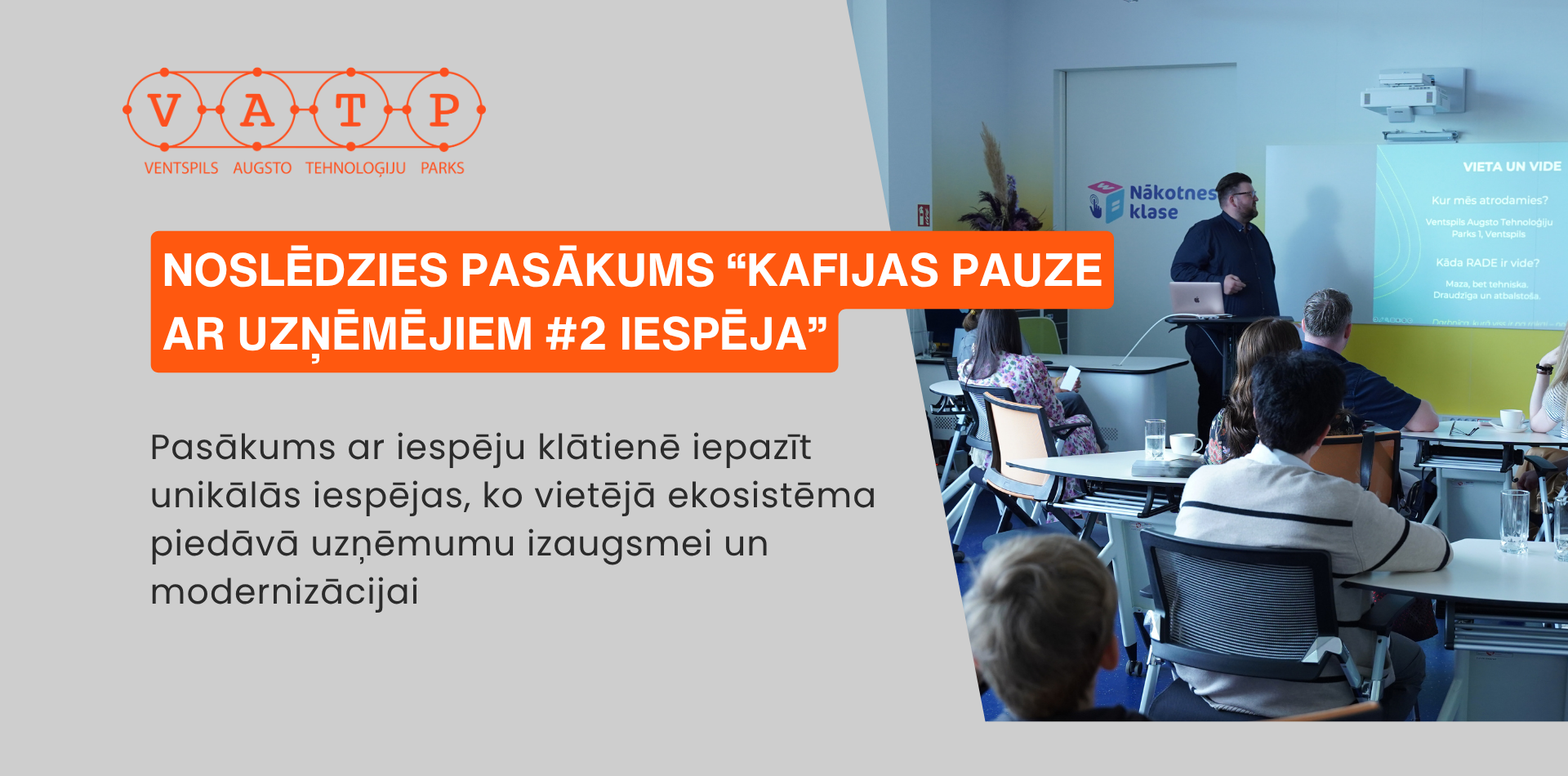
Aizvadītajā otrdienā, 9. jūnijā, Ventspils Augsto tehnoloģiju parkā un dažādās pilsētas inovāciju lokācijās norisinājās Ventspils Biznesa atbalsta centra rīkotā tīklošanās un informatīvā pasākuma otrā daļa "Kafijas pauze ar uzņēmējiem #2 IESPĒJA". Pasākums atkal pulcēja plašu loku Ventspils valstspilsētas un novada uzņēmēju, kā arī biznesa ideju autoru, lai šoreiz ne tikai teorētiski pārrunātu biznesa attīstību, bet arī klātienē iepazītu unikālās iespējas, ko vietējā ekosistēma piedāvā uzņēmumu izaugsmei un modernizācijai. Pasākuma pirmā daļa norisinājās Ventspils Augsto tehnoloģiju parkā 1, kur brīvā un nepiespiestā gaisotnē, malkojot kafiju, klātesošie tika iepazīstināti ar pirmajām pieturām: Dizaina darbnīca RADE pārstāvji iepazīstināja uzņēmējus ar iespējām radīt ne tikai mūsdienīgus dizainus pašu spēkiem, bet arī redzēt visu plašo RADE iekārtu klāstu, kas var palīdzēt spert nākamos soļus uzņēmuma attīstībai. VATP Digitālā satura studijā savukārt viesiem bija iespēja izspēlēt un iefilmēt improvizētu interviju, kā arī iepazīties ar satura veidošanas rīkiem, kas palīdzētu uzlabot uzņēmumu vizuālo identitāti un digitālo klātbūtni tirgū. Tālāk pasākuma "odziņa" - kopīgi ar drošāko pārvadātāju Latvijai "Ventspils Reiss" autobusu devāmies un nākamajiem pieturas punktiem: Moomentum, kur komanda dalījās ar savu pieredzi un pakalpojumiem, atklājot iespējas ikvienam attālinātā darba veicējam un tiem, kas vēlas realizēt savus pasākumus, seminārus un citas idejas pašā Ventspils centrā ar brīnišķīgu skatu uz pilsētu. Savukārt Prototipēšanas centra eksperti sniedza detalizētu ieskatu par iespējām radīt un testēt jau nopietnākus produktus, izmantojot modernas tehnoloģijas un iekārtas, kas būtiski atvieglo ceļu no idejas līdz gatavam tirgus produktam. Uzņēmējiem tā bija lieliska iespēja savām acīm redzēt tehnoloģiskos procesus un rast praktiskas idejas savu uzņēmumu efektivitātes un konkurētspējas celšanai. Ventspils Biznesa atbalsta centrs izsaka lielu pateicību visiem pasākuma dalībniekiem par lielo interesi, aktīvajām diskusijām un vēlmi sadarboties. Uzņēmēju aktivitāte abos sērijas pasākumos apliecina, ka Ventspils reģiona komersantiem ir augsta motivācija ieviest inovācijas, izmantot vietējos atbalsta instrumentus un augt kopā. Uz tikšanos nākamajos Ventspils Biznesa atbalsta centra organizētajos pasākumos un semināros!

User:Bertrik Sikken

🇳🇱 · Revelation space · Bertrik Sikken

← Older revision Revision as of 08:45, 16 June 2026 Line 44: Line 44: Live traffic map: https://opentrafficmap.org/ Live traffic map: https://opentrafficmap.org/ In the Netherlands, SPAT/MAPem messages are not transferred over wifi-p, but over UDAP. You need credentials to access that data, it is not clear if it is feasible to hobbyist to access it. Interesting project: https://github.com/idkmanLool9/Verkeerslicht Figure out how to contribute to the above project. Figure out how to contribute to the above project.

Central Air Extractor / Centrale Afzuiging Ventilatie

🇳🇱 · MakerSpaceLeiden · LucasV

See Also ← Oudere versie Versie van 16 jun 2026 21:08 Regel 48: Regel 48: De dakfans van de Olga hebben [[Ventilator-regeling_Project#Handleidingen Handleidingen]] die bij het [[Ventilator-regeling_Project]] zijn opgenomen: [[:Bestand:Gescande_originele_handleiding_DHA_E_P_30_dakfan_OCR.pdf|Origineel, ingescand, in het Duits]] en een [[:Bestand:Engelse_handleiding_DHA_E_P_dakfan.pdf|Engelse nieuwere versie]]. De Duitse handleiding is leidend (want origineel, op papier meegeleverd met de ventilatoren), maar de Engelse heeft hogere resolutie afbeeldingen. De dakfans van de Olga hebben [[Ventilator-regeling_Project#Handleidingen Handleidingen]] die bij het [[Ventilator-regeling_Project]] zijn opgenomen: [[:Bestand:Gescande_originele_handleiding_DHA_E_P_30_dakfan_OCR.pdf|Origineel, ingescand, in het Duits]] en een [[:Bestand:Engelse_handleiding_DHA_E_P_dakfan.pdf|Engelse nieuwere versie]]. De Duitse handleiding is leidend (want origineel, op papier meegeleverd met de ventilatoren), maar de Engelse heeft hogere resolutie afbeeldingen. Ook de ventilator-regeling van de Olga heeft handleidingen: [[:Bestand:ARE-N-instrukcja-obslugi.pdf|Instalatie-Handleiding (Pools)]]. Bediening op het kastje zelf is aan/uit en "Hoeveel?". Bediening via ons eigen MakerSpace systeem is via 0-10V en zal worden omschreven nadat het gebouwd is. Ook de ventilator-regeling van de Olga heeft handleidingen: Een [[:Bestand:ARE_N_2024_PL.pdf|productblad]] en een [[:Bestand:ARE-N-instrukcja-obslugi.pdf|Instalatie-Handleiding (Pools)]]. Bediening op het kastje zelf is aan/uit en "Hoeveel?". Bediening via ons eigen MakerSpace systeem is via 0-10V en zal worden omschreven nadat het gebouwd is. == Colofon == == Colofon == Opgesteld op 01/02/2019 door Fulco. Voel je vrij aanpassingen te maken. Opgesteld op 01/02/2019 door Fulco. Voel je vrij aanpassingen te maken.

Spuitcabine / Sprayhood

🇳🇱 · MakerSpaceLeiden · LucasV

← Oudere versie Versie van 16 jun 2026 20:51 Regel 1: Regel 1: [[Category:Tools]][[Category:Metal working tools]][[Category:Wood working tools]][[Category:Painting tools]][[Category:Arts and crafts tools‎]] [[Category:Tools]][[Category:Metal working tools]][[Category:Wood working tools]][[Category:Painting tools]][[Category:Arts and crafts tools‎]] {{NeedsWorkOlga|Ventilatie / Afzuiging werkt anders in de Olga, en Olga heeft een Paintbooth}} Spuitcabine met afzuiging. Spuitcabine met afzuiging.

Test

🇳🇱 · MakerSpaceLeiden · Tycho van den Heuvel

Is the machine switch turned off? ← Oudere versie Versie van 16 jun 2026 12:29 (Een tussenliggende versie door dezelfde gebruiker niet weergegeven) (geen verschil)

Was ist elektrischer Strom?

🇩🇪 · Attraktor · Kapest

Fließender Strom ← Older revision Revision as of 12:09, 16 June 2026 Line 10: Line 10: Damit die freien Elektronen zu elektrischem Strom werden, also fließen, ist eine '''elektrische Spannung''' nötig. Eine Spannung entsteht, indem sich viele Elektronen zusammenballen und so deren negative Ladung größer wird als die positive Ladung der Atomkerne in der Nähe. Bei anderen Atomen, von denen die Elektronen abgezogen wurden entsteht dann eine positive Ladung. Die Differenz der Ladungen entspricht der Spannung. Damit die freien Elektronen zu elektrischem Strom werden, also fließen, ist eine '''elektrische Spannung''' nötig. Eine Spannung entsteht, indem sich viele Elektronen zusammenballen und so deren negative Ladung größer wird als die positive Ladung der Atomkerne in der Nähe. Bei anderen Atomen, von denen die Elektronen abgezogen wurden entsteht dann eine positive Ladung. Die Differenz der Ladungen entspricht der Spannung. Diese Verschiebung der Elektronen kann chemisch (Batterie, Akku) oder magnetisch (Generator) erzeugt werden.</br> Diese Verschiebung der Elektronen kann chemisch (Batterie, Akku) oder magnetisch (Generator) erzeugt werden.</br> Hier zum Beispiel eine Batterie:</br> [[file:Batterie.png]] Wasseranalogie von Claude.ai:</br> Wasseranalogie von Claude.ai:</br>

Discover a creative community

🇺🇸 · MakeHaven · Make Haven

A Place for Creators & Innovators MakeHaven: 24/7 makerspace with woodworking, laser cutters, 3D printers, sewing, and more. Expert volunteers ready to help you start your next project. Schedule a Tour or Join Now Limited Promotion: Sign up now and get 50% off your first two months! More You Can Do Workshops & Events Join Our Newsletter Follow Us on Instagram Explore Our Main Rooms Discover the variety of spaces available at MakeHaven. Image Main Fab Lab 3D printers, laser cutters, mold making and casting, printmaking, ceramics, and more. Image Metal Shop Shop focused on metal work and thermal plastics. Image Wood Shop Full-featured woodworking shop with a range of hand, power, and computer-controlled tools. Image Community Bio Room Innovative space for biotechnology projects and collaboration. Image Media Studio Room dedicated to audio recording, music production, podcasts, photography, and video production. Image Textiles Space equipped for sewing, embroidery, knitting, and quilting. What Our Members Say Image "MakeHaven gave me the confidence and resources to discover my true passion of videography and start my own media company!" – Emma, Member Image "I thought reupholstering was a daunting task, but with the community and available equipment it was a breeze." – Young, Member Image "The resources are unparalleled. The 3D printers, waterjet cutter, and CNC mill have enabled me to prototype my invention." – Chris, Member Membership Includes: 24/7 access to space Discounted workshops Tool orientation and training Tool lending (take home) library 1:1 expert consultation for your project Inclusion in a supportive community of makers Only $62 per month. Membership auto-renews each month; cancel anytime. Join Now Sign Up Now For Half Price for First Two Months or Request Income Based Sliding Scale Pricing Convenient Downtown Location Schedule a Tour Follow Us landing tracking code postcard

DIDAY: Password Manager

🇩🇪 · CCC Hamburg · stb

Ihr kennt es alle: ihr meldet euch in einer App oder auf einer Website neu an, und ihr braucht ein gutes Passwort. Aber wo bekommt man das her, und noch viel wichtiger, wie merkt man sich das? Über die Zeit kommen schnell zig wenn nicht hunderte solche Passwörter zusammen. Beim DIDAY im Juli zeigen wir euch bei uns im CCCHH, welche Optionen es gibt, und welche Vor- und Nachteile sich damit verbinden: unterschiedliche Passwort-Manager rein lokal auf dem eignenen Rechner, mit Synchronisierung über NextCloud, oder mit Cloud-Dienst. Und wir haben auch eine ganz einfach Papier-Variante, die trotzdem sicher ist! Im Anschluss stehen wir euch für Fragen und Diskussionen zur Verfügung, natürlich auch zu anderen Themen der digitalen Unabhängigkeit. Es ist keine Anmeldung erforderlich.