Events

pySpaceBremen {Python für Anfänger} Dein Einstieg in die Welt der Programmierung!

🇩🇪 · Hackerspace Bremen · Sven Neumann

🐍 Python für Anfänger – Dein Einstieg in die Welt der Programmierung!Du wolltest schon immer wissen, wie man mit Python programmiert? Dann bist du hier genau richtig!In diesem kostenlosen Online-Workshop lernst du:✅ Python installieren oder direkt im Browser ausprobieren✅ Variablen, Schleifen und Bedingungen verstehen✅ Ein einfaches Spiel live programmieren✅ Tipps & Tricks für den Einstieg💻 Vorbereitung:Option 1 : Nutze Replit – kein Download … Mehr

StartseiteUsergroupsVeranstaltungenProgrammierenPython

RepairCafé im Juni

🇩🇪 · ComputerClub Itzehoe · Timo

Auch im Juni 2026 sind wieder beim RepairCafé am Start. Am 20.6 zwischen 14 – 17 Uhr könnt ihr uns dort im Haus der Jugend finden.
AllgemeinHardwareRepairCafeVeranstaltungen

News

From Public Art to Inner Sanctuaries: The Creative Evolution of Tamao Nakayama

🇺🇸 · Nova Labs · NovaLabs

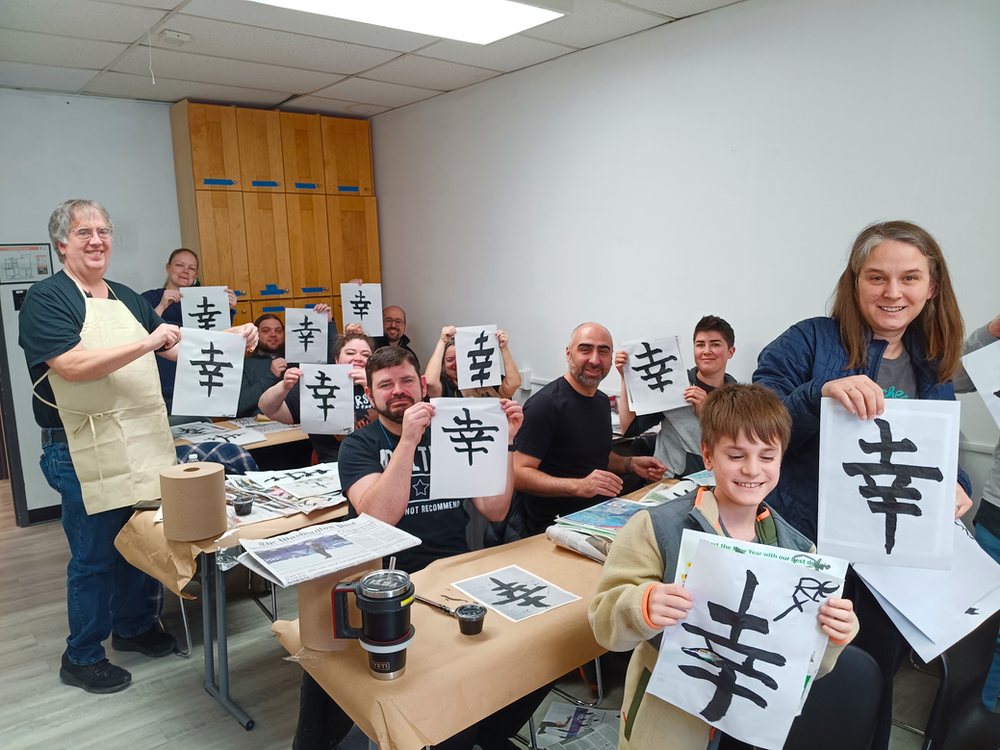
What happens when a public artist shifts focus from transforming city spaces to creating moments of quiet reflection? Nova Labs resident maker Tamao Nakayama shares her journey back to her Japanese roots, preserving traditional arts through hands-on workshops, cultural experiences, and the launch of her new venture, Tamao Atelier.
Featured MakersArtists

Book Review: A Future Spacefaring Society

🇺🇸 · Huntsville Alabama L5 Society (HAL5) - Project HALO · National Space Society

Reviewed by: Mark Lardas Title: A Future Spacefaring Society: Establishing Human Life Beyond Earth Author: Chris Carberry and Rick Zucker (Editors) Format: Paperback Pages: 367 Publisher: Springer Date: May, 2026 Retail Price: $32.99 ISBN: 978-3032114655 Find this book What will it take to make humans a spacefaring society? We are at the cusp of having people leave Earth in numbers, building an orbital industrial infrastructure and establishing human settlements in space. This book investigates what it takes to do that. The book, edited by Chris Carberry and Rick Zucker, with chapters written by leading experts in their fields, attempts a complete examination of the various factors required to create a spacefaring society. It has three sections. “Entering the Golden Age of Space Exploration” speculates on the directions and technologies we must go. “Creating Sustainability in Space” examines the technologies required for space travel and settlement. “Achieving Civilization in Space” discuss the nuts and bolts of permanently settling space. The first section of the book is its weakest. Some of the chapters seem overtaken by events. This is not the fault of their authors, but rather an artifact of the publishing cycle, which takes a year or more. Cancellation of Lunar Gateway and a reshuffle of NASA priorities with a new U.S. Administration affected several chapters. The chapter on the U.S. Space Force was particularly affected. The author based his assumptions on the space polices of the previous Administration (as shown examining the footnotes). The current Administration made significant changes in direction. Additionally, military events in 2026 reveal China’s military threat to have been grossly exaggerated. This is not to say the author did a bad job. Rather, his recommendations read like a roadmap for the current Administration. The authors institutional preferences are displayed in this section. They assume government will lead space development, with commercial space following. There is also an emphasis on high-level centralization of space exploration and development. Yet the throw-weight revolution created by SpaceX’s Falcon and Starship launch vehicles undercuts many of these assumptions. With high launch costs, internationalism and cooperation were mandatory to build ISS. Low launch cost allows independent actors to plan big. Starlink was a purely private sector initiative. If history is any judge, free enterprise in space and decentralized government control will prove more successful than a centralized, bureaucratized approach. Spanish and French New World settlements were centralized and government-run. English settlements were private ventures. The latter ultimately dominated world culture, while the Spanish and French settlements never achieved the same level of influence. The middle section is the book’s strongest. This book is worth getting just for those chapters. Hard science and engineering explorations of the technologies needed, they provide detailed looks at power generation, on-site construction, life support (including food) communications and AI, robotics and computing. There are also chapters on medicine and health, gravity effects and biology. Some of these discussions explore unexpected areas, delightfully so. This includes examination of means of generating artificial gravity, growing artificial meat, and space agriculture. The importance of these things often seems obvious in retrospect. You may not agree with the authors and their conclusions, but they are thought-provoking and merit consideration. The final third is mixed, but interesting. It explores the art of living in space. Not mere survival, but having fulfilling lives. These include chapters on building towns, and the infrastructure for these settlements, the challenges of human reproduction, and various social aspects. They offer discussions of education and legal systems, and cultural aspects, including music, sports and developing a convivial culture. The general rule seems to be the more closely a chapter is linked to hard sciences or actual activities, the stronger it seems. The chapter on surface construction focuses as much on architecture as engineering, exploring what makes a habitat livable rather than just survivable. Similarly, chapters on music and sports are fascinating explorations of the possibilities offered in a space environment. The chapters on education and space law seem weakened by author’s institutional preferences for strong centralized systems. The education chapter neglects homeschooling. It seemingly favors recreating the U.S. public education system (which is dysfunctional) on Mars. The chapter on space law blandly assumes having a legal system in place will suffice to bring order. The book makes frequent appeals to the importance of Diversity, Equity and Inclusion, although space cares nothing about a spacefarer’s race, religion, gender or sexual orientation. It punishes errors made, up to and including death, regardless of DEI characteristics. There are gaps, especially about religion. Mentions of religion are few, fleeting, and mostly negative, such as worries about religious observations taking time away from a devout astronaut’s work or inbreeding among the Amish. There is also a brief acknowledgement that religion historically motivated settlement on Earth, and wondering if the same might happen in space. (Spoiler alert: it almost certainly will.) Despite the book’s focus on building community, it neglects the community-developing aspect of church, mosque, and synagogue. With multiple chapters on sports, arts, and music, not one focused on religion. Curious and revealing. Despite these criticisms, anyone interested in challenges of settling space will find this book is well worth reading. The hard science sections read like a how-to roadmap. Sections with which readers might have disagreement are well thought out. They also provide a nearly comprehensive syllabus of issues that must be considered to create a true spacefaring society. © 2026 Mark Lardas NSS index of over 500 book reviews

Book ReviewsBook Reviews: Non-Fiction

Heute live vor Ort: Heimautomatisierungs-Stammtisch

🇩🇪 · Hackerspace Bremen · Jens Bretschneider

Heute Abend beim monatlichen Stammtisch sehen wir uns mal wieder live vor Ort im Hackerspace! Bring‘ deine neuesten Smarthome-Komponenten mit, stell‘ uns deine Projekte vor oder tausche dich einfach nur mit uns aus – wir freuen uns in jedem Fall über deinen Besuch. Sofern Interesse besteht, werden wir uns im Laufe des Abends den neuen … Mehr

StartseiteUsergroups

Top Skills Kids Need in 2030 (Future Skills Every Parent Should Know)

🇨🇦 · Maker Kids · Samantha Dinelle

May 31, 2026 | MakerKids Team Parents today are asking a big question: what future skills do kids need to succeed in 2030? At MakerKids , we see firsthand how fast technology is changing through STEM, coding , robotics , and even Minecraft-based learning. According to research from Dell Technologies , 85% of jobs that will exist in 2030 haven’t been invented yet . This reflects how quickly technology and AI are reshaping the workforce, from software development and healthcare to design, engineering, and education. That means preparing kids isn’t about memorizing facts. It’s about helping them think, adapt, and build real-world skills through STEM education. Problem-Solving: A Key Future Skill for Kids in 2030 In 2030, kids won’t just be asked to complete tasks. They’ll need to figure out problems that don’t have clear answers. This is where STEM learning becomes powerful. When kids work on coding or robotics projects, they face real challenges. Something doesn’t work, and they have to fix it. That process builds persistence and logical thinking . At MakerKids , students learn to break problems into smaller steps, test ideas, and improve them. Ask yourself: does your child get the chance to struggle productively, or are they always given the answer? That difference matters. Digital Literacy: Why It’s One of the Most Important Skills for Kids Many kids use technology every day, but using it is not the same as understanding it. By 2030, digital literacy will mean knowing how systems work, not just how to navigate them. As AI tools become part of everyday life, digital literacy will also include understanding how AI generates information, when to trust it, and how to use it responsibly. Kids who understand how technology works behind the scenes will have a significant advantage over those who only know how to use the tools. Additionally, coding helps kids understand logic, sequences, and cause-and-effect. Minecraft can even introduce concepts like circuits and automation through redstone systems. These experiences shift kids from passive users to active creators. If your child is already spending time on screens, the question becomes: are they building skills or just consuming content? Creativity Paired With Technical Skills Creativity will still matter in the future, but it will look different. Kids will need to create using technology, not just alongside it. This is what many experts now call future-ready skills for kids , combining creativity with technical understanding. In STEM education programs, creativity shows up in how kids design games, build worlds in Minecraft, and prototype ideas using robotics. AI can be one helpful tool for generating ideas, images, and solutions. The goal is not to let AI do the work for them, but to use it as a tool that supports creativity and critical thinking. At MakerKids , projects are open-ended, which means no two outcomes are the same. Kids learn that there isn’t just one “right” answer. This builds confidence and ownership. It also teaches kids how to turn ideas into something real, which is a key skill for future careers. Collaboration in a Tech-Driven World Even with more automation, teamwork will remain essential. The difference is that collaboration will often happen around technology. Kids need to learn how to explain ideas, work in teams, and build together. In coding and robotics classes, students often share projects, troubleshoot together, and learn from each other. This builds communication skills alongside technical knowledge. Think about it this way: can your child explain how something works, or just use it? Being able to communicate ideas clearly will set them apart. Adaptability: The Most Important Future Skill for Kids The biggest skill for 2030 will be adaptability, with 67% of employers seeking this out when evaluating candidates’ resumes. Technology will keep changing, and kids will need to keep up. AI is a perfect example. The tools available today look very different from those available just a few years ago, and they will continue evolving. Kids who are comfortable learning new technologies will be better prepared for future careers than those who focus on mastering a single platform or software. Instead of focusing on a single tool, strong STEM programs focus on learning new tools. At MakerKids, students progress from beginner concepts like sequences to more advanced ideas like loops and conditional logic, aligned with the Ontario coding curriculum by grade. This progression helps kids build confidence as they grow. How Parents Can Start Building These Skills Today You don’t need to wait to start building future skills for kids at home or through structured programs. The key is choosing experiences that balance structure with creativity. Look for programs that include hands-on projects, live instruction, and real skill-building in STEM, coding, robotics, digital literacy, and emerging technologies such as AI. Avoid options that rely only on passive videos or unstructured play. Consistency matters. Weekly classes or structured camps help kids build skills over time instead of jumping between topics. So here’s a question to consider: is your child’s current activity helping them grow, or just keeping them busy? If you’re ready to help your child build future-ready skills through STEM education, coding, robotics, and Minecraft, MakerKids offers programs designed for every age group. To learn more or get started, reach out anytime at info@makerkids.com or call 416-385-3577. The post Top Skills Kids Need in 2030 (Future Skills Every Parent Should Know) appeared first on MakerKids .

Uncategorized

From Dublin to Chemnitz: A Maker Exchange Through Vulca

🇮🇪 · TOG · tdr

In May, Jason Pettiaux and I had the chance to travel to Chemnitz in Germany as invited guests for Open European Lab Day at FabLab Chemnitz. Jason is a long-standing European maker and open source advocate, and was the other invited guest for the visit. The trip came about through the Vulca Network , which helps connect makers, hackerspaces, FabLabs and community workshops across Europe. It turned into much more than a single workshop, with visits to makerspaces, museums, research institutes, a radio club, and even a bit of hiking and amateur radio along the way. It was a lovely reminder of how strong and varied the maker community is across Europe, and how much we can learn from visiting each other’s spaces. Friday: Arriving in Chemnitz I travelled over on Friday and met up with Jason and the local FabLab Chemnitz team. Maik Jähne and Babette Sperling were our main hosts for the trip and gave us a brilliant welcome. It was great to finally meet people in person after the usual run of emails, planning messages and travel arrangements. There is always something nice about arriving into a new city through a maker connection, as you immediately get a sense of the local community and the people who make things happen. Chemnitz itself has a strong technical and industrial history, which made it a very fitting place for a weekend of making, workshops and community activity. Saturday: Open European Lab Day at FabLab Chemnitz Saturday was Open European Lab Day at FabLab Chemnitz, with lots of people coming through the space to see what was happening, meet the team and take part in hands-on activities. I ran a workshop called Hidden Colors , where we built polarisation viewers and explored the colours hiding in everyday materials. Using layers of clear tape, plastics and polarising filters, participants could see patterns and colours appear that are normally invisible to the eye. It is a simple but very satisfying mix of science, making and “let’s try it and see what happens”. The workshop started with a bit of the science behind polarisation, then moved into building the viewers from laser-cut parts. Once everything was glued together, we experimented with layers of tape to create different colours and patterns. The results were really beautiful, with some pieces looking almost like stained glass. A big thank you to FabLab Chemnitz for hosting the workshop, to Maik and Babette for the warm welcome, and to the Stadtfabrikanten team for making the day happen. Event details: https://stadtfabrikanten.org/en/article/open-european-lab-day-fablab-chemnitz-09052026 Photos from FabLab Chemnitz: https://www.tog.ie/gallery/nggallery/album/fablab-chemnitz Saturday Evening: Museumsnacht and Chemnitz After the FabLab day, we also got to explore a bit more of Chemnitz as part of the city’s Museumsnacht. We visited the Museum für Naturkunde Chemnitz , including a look at the natural history exhibits and some very impressive fossils. It was a great way to round off the day: a makerspace full of hands-on activity, followed by a city-wide museum evening celebrating culture, history and science. Photos from Chemnitz, Europatag and Museumsnacht: https://www.tog.ie/gallery/nggallery/album/chemnitz-europatag-und-museumsnacht Sunday: Hiking in Saxon Switzerland Sunday was a chance to see a different side of the region. We headed out hiking in Saxon Switzerland, climbing up to Lilienstein. The local pastime seemed to involve hiking to the top of a hill and finding a bar, which is a tradition I can fully support. The landscape was stunning, and it was a good reminder that these trips are not just about buildings and equipment. They are also about the conversations in between, the shared meals, the walks, and getting a feel for the place around the maker community. Photos from Lilienstein and Saxon Switzerland: https://www.tog.ie/gallery/nggallery/album/lilienstein-sachsische-schweiz Monday: Dresden Makerspace Tour Monday was a full day in Dresden, visiting a range of makerspaces and community workshops. Maik, who is Manager of Networks and Collaborations at SLUB Makerspace and a member of several other spaces in the region, guided us through a packed day of visits. Each space had its own character, and there were plenty of ideas to bring home to TOG. We started with a tour of LabX / HTWD Makerspace , where we learned about their open-source hardware programme and hardware prototyping projects. It was interesting to see how making, education, and applied research come together in a university setting. Photos from LabX / HTWD Makerspace: https://www.tog.ie/gallery/nggallery/album/labx-htwd-makerspace We also visited SLUB Makerspace , based in the central library in Dresden. It was a great example of a public institution supporting hands-on learning, digital fabrication and access to tools. Photos from SLUB Makerspace: https://www.tog.ie/gallery/nggallery/album/slub-makerspace One of the highlights of the day was the Technische Sammlungen Dresden . It is hard to describe just how good this visit was. Holger gave us a tour and explained not just the exhibits, but how the museum thinks about public engagement and how its makerspace is interwoven into the museum. Photos from Technische Sammlungen Dresden: https://www.tog.ie/gallery/nggallery/album/technische-sammlungen-dresden The last tour of the day was Konglomerat , which felt the closest to TOG in spirit. It was a mature, community-led space with lots of practical ideas around layout, signage, storage and how to help people navigate a busy shared workshop. I will definitely be taking some of their signage ideas back with me. Photos from Konglomerat: https://www.tog.ie/gallery/nggallery/album/konglomerat Tuesday: Engineering Research, Radio and Rain On Tuesday, Jason Pettiaux and I were kindly given a tour of the Fraunhofer-Institut für Werkzeugmaschinen und Umformtechnik IWU by Maximilian Stange. It was incredible to see the scale of engineering research taking place there. I have never seen such a concentration of applied engineering research in one place before. Sadly, no photos from inside, but it was a real highlight of the trip. Later in the day, I tried a bit of amateur radio with a Parks on the Air activation in Chemnitz. The weather was not exactly on my side, and I ended up doing radio under an umbrella in the rain. Still, it is always fun to try to get on the air from a new place. That evening, while Jason had a break from the maker tour schedule, I visited the Chemnitz-Süd ham radio club . The club is active across a wide range of activities, including International Lighthouse and Lightship Weekend and Linux Days. I had the chance to meet members, hear about their projects, and share a bit about amateur radio activity in Ireland. Thank you to Jens DB5JH, Mario DM5AHA, Carsten DG0JCG, Jürgen DL4JWU, Wolfgang DL5WSC and Veiko DM9TT for their generous welcome and hospitality. Photos from the radio visit in Chemnitz: https://www.tog.ie/gallery/nggallery/album/radio-in-chemnitz-chemnitz-sud Wednesday: Berlin, Brandenburg Gate and a Cat Café On Wednesday, I took the train to Berlin. I tried another short Parks on the Air activation near the Brandenburg Gate, which sounded like a great idea in theory. In practice, the rain and the high noise floor made it a bit more challenging, and after around 90 minutes, I had only managed four contacts. At that point, lunch won over the radio. I ended up meeting an old friend and visiting a cat café, which was not a bad way to finish the trip at all. Reflections This trip was a brilliant mix of making, science, community, engineering and radio. The workshop at FabLab Chemnitz was the starting point, but the value of the trip came from all the conversations and visits around it. I came home with a head full of ideas: how other spaces explain themselves to visitors, how museums can work with makerspaces, how public libraries can support hands-on learning, and how maker communities across Europe face many of the same challenges around tools, space, volunteers, storage and welcoming new people. A big thank you again to FabLab Chemnitz for hosting, to the Vulca Network for making the connection possible, to Maik Jähne and Babette Sperling for looking after us so well, and to everyone who took time to show us around, share their work and make us feel welcome. Maker travel is always a good reminder that while every space is different, the spirit is very familiar: people sharing skills, opening doors, fixing things, building things, and making room for curiosity.

AdvocacySpace

Other

Home Automation Treffen

🇩🇪 · C3D2 · max

Datum Ort bis Dienstag, 30. Juni 2026 um 19:00 Uhr 21:00 Uhr , /proc, Zentralwerk, Riesaer Straße 32, 01127 Dresden HQ Wir wollen uns Treffen und über Home-Assistant, ESPHome, Zigbee, ESP32, MQTT, Thread, Matter etc. und deren Integration miteinander, aber auch Home Automation im allgemeinen sprechen und uns über verschiedene Lösungen, Produkte und Automatisierungen austauschen. Zwischen den Treffen chatten wir oft in einen Matrix-Raum: #home-automation:c3d2.de

ikea_uppatvind_esp_smart_mod

🇩🇪 · AFRA · afra_rootcat (afra_rootcat@undisclosed.example.com)

@@ -70,28 +70,28 @@ ^ Test Point ^ Function ^ | TP2 | GND | | TP3 | 5V | | TP4 | Button Input | - | TP7 | LED / PWM Sense | + | PWM | FAN PWM Sense | | TP6 | Optional LED Signal | ===== GPIO Mapping ===== i added a Transistor - + <code> BC547C ┌─────┐ │ │ └─────┘ | | | C B E - + </code> ^ UPPÅTVIND ^ ESP32-C3 ^ Function ^ | TP2 | GND | Ground | | TP3 | 5V | Power | | TP4 | GPIO10 | Button Simulation | - | TP7 | GPIO4 | PWM / LED Detection | + | PWM | GPIO4 | PWM Detection | Do Not USE TP7 or TP 9 ! (in Off State it still have the last pwm value) | TP6 (optional) | GPIO5 | Additional LED State | ===== Wiring ===== @@ -99,9 +99,9 @@ ==== Basic Wiring ==== <code> UPPÅTVIND - TP7 ---10kΩ ---+--- GPIO0 - yellow + PWM ---10kΩ ---+--- GPIO0 - yellow | 20kΩ +-------- GND black @@ -138,9 +138,178 @@ * Fan entity * API integration * WiFi fallback AP + <code> + # ------------------------------ + # Sensors Configuration + # ------------------------------ + # ------------------------------ + # Sensors & Status + # ------------------------------ + binary_sensor: + - platform: status + name: "${devicename} Status" + + # TP6 -> GPIO1 (Filter LED) + - platform: gpio + pin: + number: GPIO1 + mode: + input: true + pullup: true + name: "UPPATVIND Filter Warning" + id: filter_led + + # ------------------------------ + # Information Sensors + # ------------------------------ + + + - platform: pulse_counter + pin: + number: GPIO0 + mode: + input: true + pullup: true + name: "UPPATVIND Motor Pulses" + id: uppatvind_rpm + update_interval: 1s + internal: true + + # ------------------------------ + # Text Sensors (Diagnostics) + # ------------------------------ + text_sensor: + - platform: wifi_info + ip_address: + name: "${devicename} IP Address" + ssid: + name: "${devicename} Connected SSID" + bssid: + name: "${devicename} BSSID" + mac_address: + name: "${devicename} MAC Address" + + - platform: template + name: UPPATVIND Mode + id: uppatvind_mode + lambda: |- + float rpm = id(uppatvind_rpm).state; + if (rpm < 1000) + return {"Off"}; + if (rpm < 9500) + return {"Low"}; + if (rpm < 13500) + return {"Medium"}; + return {"High"}; + update_interval: 1s + + # ------------------------------ + # Restart Switch Configuration + # ------------------------------ + switch: + - platform: restart + name: ESP-UPPATVIND restart + + # ------------------------------ + # TP4 -> GPIO04 (Button) + # ------------------------------ + output: + - platform: gpio + pin: + number: GPIO4 + inverted: false + id: fan_button + + select: + - platform: template + name: "UPPATVIND Speed" + id: uppatvind_speed + optimistic: false + options: ["Off", "Low", "Medium", "High"] + lambda: |- + return id(uppatvind_mode).state; + set_action: + - if: + condition: + lambda: |- + return x == "Off"; + then: + - button.press: uppatvind_off + - delay: 6s + - if: + condition: + lambda: |- + return x != "Off"; + then: + - script.execute: + id: goto_speed + target: !lambda 'return x;' + + script: + - id: goto_speed + mode: queued + parameters: + target: string + then: + - repeat: + count: !lambda |- + int current = 0; + int desired = 0; + auto state = id(uppatvind_mode).state; + if (state == "Low") + current = 1; + else if (state == "Medium") + current = 2; + else if (state == "High") + current = 3; + + if (target == "Low") + desired = 1; + else if (target == "Medium") + desired = 2; + else if (target == "High") + desired = 3; + if (current == desired) + { + ESP_LOGI("uppatvind", "Already at target"); + return 0; + } + int steps = (desired - current + 4) % 4; + ESP_LOGI( + "uppatvind", + "Current=%d Desired=%d Steps=%d", + current, + desired, + steps + ); + return steps; + then: + - button.press: uppatvind_button + - delay: 1500ms + + button: + - platform: template + name: "UPPATVIND Next" + id: uppatvind_button + on_press: + then: + - output.turn_on: fan_button + - delay: 250ms + - output.turn_off: fan_button + + - platform: template + name: "UPPATVIND OFF" + id: uppatvind_off + on_press: + then: + - output.turn_on: fan_button + - delay: 4000ms + - output.turn_off: fan_button + + </code> ===== Home Assistant Integration ===== Possible automations: @@ -152,8 +321,77 @@ * Combine with air quality sensors * Dashboard integration + <code> + type: custom:stack-in-card + cards: + - type: custom:mushroom-template-card + primary: UPPATVIND I + secondary: > + {% if is_state('binary_sensor.uppatvind_filter_warning','on') + %} + ⚠ Filter Warning + {% else %} + Filter OK + {% endif %} + icon: mdi:air-purifier + - type: custom:mushroom-chips-card + chips: + - type: template + icon: mdi:fan-off + entity: select.uppatvind_speed + icon_color: > + {% if is_state('select.uppatvind_speed','Off') %} red {% + endif %} + tap_action: + action: perform-action + perform_action: select.select_option + target: + entity_id: select.uppatvind_speed + data: + option: "Off" + - type: template + icon: mdi:fan-speed-1 + entity: select.uppatvind_speed + icon_color: > + {% if is_state('select.uppatvind_speed','Low') %} green {% + endif %} + tap_action: + action: perform-action + perform_action: select.select_option + target: + entity_id: select.uppatvind_speed + data: + option: Low + - type: template + icon: mdi:fan-speed-2 + entity: select.ppatvind_speed + icon_color: > + {% if is_state('select.uppatvind_speed','Medium') %} orange + {% endif %} + tap_action: + action: perform-action + perform_action: select.select_option + target: + entity_id: select.uppatvind_speed + data: + option: Medium + - type: template + icon: mdi:fan-speed-3 + entity: select.uppatvind_speed + icon_color: > + {% if is_state('select.uppatvind_speed','High') %} red {% + endif %} + tap_action: + action: perform-action + perform_action: select.select_option + target: + entity_id: select.uppatvind_speed + data: + option: High + + </code> ===== Calibration ===== The LED/PWM signal values may vary between purifier revisions.

Open Chaos im Café der Bürgerschule

🇩🇪 · Leitstelle511-ccch

Aufgrund von Umbauarbeiten sind die normalen Räume der Leitstelle für das OpenChaos am 03.06. und 10.06. nicht nutzbar. Deswegen findet das Open Chaos an diesen Tagen im Café der Bürgerschule statt.

faq - remove link to non-existent events tab

🇨🇦 · VHS · amber (amber@undisclosed.example.com)

Frequently Asked Questions General [Q] What does VHS stand for? [A] Vancouver Hack Space. Our full, official, name is Vancouver Hack Space Society (as we’re a not-for-profit society), Please note that it is “hack space”, not one word – this often a source of confusion.

Workshop on Wednesday: Polyeder-Bastel-Workshop (03.06.2026, 15:00 – 17:00)

🇩🇪 · Maschinenraum · maschinenraum

English version below Bastel deine eigenen coolen dekorativen geometrischen Papiermodelle mit unseren Vorlagen! Kommt zu unserem Polyeder-Bastel-Workshop am Mittwoch, von 15:00 - 17:00 im maschinenraum. Wann? : 03.06.2026, 15:00 - 17:00 Uhr Wo? : maschinenraum Wer? : Aaron Hier geht es zu allen Workshops aus unserer Reihe: https://blog.maschinenraum.tk/2026/05/20/neue-workshopreihe-im-mai-juni-startet-heute/ Make your own cool decorative geometric paper models using our ready-made templates! Come to our Polyhedron Crafting Workshop on Wednesday, from 15:00 - 17:00 at maschinenraum. When? : 03.06.2026, 15:00 - 17:00 Where? : maschinenraum Who? : Aaron See all workshops from our series: https://blog.maschinenraum.tk/2026/05/20/neue-workshopreihe-im-mai-juni-startet-heute/

pir_motion_sensor_mr-hw08kt_-_kitchen

🇩🇪 · AFRA · afra_rootcat (afra_rootcat@undisclosed.example.com)

@@ -1,5 +1,29 @@ ====== PIR Motion Sensor (MR-HW08KT) ====== + ===== WARNING ===== + + + + ** ⚠ DANGER – MAINS VOLTAGE (85–265 V AC) ⚠ ** + + This device operates directly on mains voltage. + + * Risk of electric shock + * Risk of serious injury or death + * Risk of fire if wired incorrectly + + Only connect the sensor when power is disconnected. + + Always use: + + * Proper insulation + * Enclosure / housing + * Strain relief + * Protective Earth (PE) where required + + Never connect the sensor directly to low-voltage (12 V DC) systems. + + ===== Overview ===== The MR-HW08KT is a compact PIR motion sensor for AC-powered lighting. @@ -33,10 +57,10 @@ PE (Green/Yellow) _---------------------------------> PE </code> {{:Projekte:mr-hw08kt:mr-hw08kt-1.png?400|MR-HW08KT}} - {{:hardware:mr-hw08kt:mr-hw08kt-2.png?400|MR-HW08KT-wiring}} - {{:hardware:mr-hw08kt:mr-hw08kt-3.png?400|Wiring-example}} + {{:Projekte:mr-hw08kt:mr-hw08kt-2.png?400|MR-HW08KT-wiring}} + {{:Projekte:mr-hw08kt:mr-hw08kt-3.png?400|Wiring-example}} ===== DIP Switch Settings ===== ==== Light Sensor ====

PicaHack - Talleres de informática libre - Junio 2026

🇪🇸 · Pica Pica HackLab

Talleres de informática libre - Junio 2026 Lunes, 01/06/2026, 23:47 h. Este junio de 2026 en Asturias (España), Pica Pica HackLab (PicaHack) organiza un programa de talleres de iniciación a la informática libre , destinado a personas con pocos conocimientos sobre el tema pero interesadas en las implicaciones éticas, sociales y ambientales de las tecnologías de la información. El movimiento de la informática libre defiende que el software (los programas o aplicaciones de ordenador o computadora) y el hardware (los componentes físicos o materiales de los ordenadores o computadoras) deben poder ser usados, modificados y compartidos por cualquier persona, sin imposición de restricciones técnicas, legales o económicas, como derechos y libertades de todas las personas. Asimismo, también la información debe estar disponible de igual forma. Esto es fundamental no solo para el bien de la persona a título individual sino también de la población en general. Estos derechos y libertades son aún más importantes mientras nuestras actividades cotidianas se vuelven más y más ligadas a la informática: en un mundo de palabras, sonidos e imágenes digitales, la informática libre en concreto y el libre acceso a la información y al conocimiento en conjunto viene a representar una parte fundamental del ejercicio de los derechos y las libertades en general. Organización Talleres/cursos de informática libre con una planificación regular, los martes de siete (19:00 h) a ocho y media (20:30 h) , en El Olivar (Calle Oscura, número 1/3 - Oviedo - Asturias) . Se combinarán dos formatos de talleres/cursos que se alternarán entre semanas: Un curso de introducción a la línea de comandos e iniciación a la programación útil, que está organizado como curso extendido en el tiempo, con sesión cada primer y tercer martes de mes. Un curso de introducción a la la reparación electrónica, que está organizado como curso extendido en el tiempo, con sesión cada segundo y cuarto martes de mes. Talleres breves (una sola sesión) de temática variada, el quinto martes de mes o el primer martes de mes si el anterior mes tuvo 4 (y no 5) semanas. Proyección y debate de documentales, el segundo martes de mes. --> Complementariamente se realizará una jornada de instalación de sistemas operativos libres un sábado antes de comenzar los talleres/cursos y otro a mitad de mes. Quien quiera puede traer su ordenador e instalaremos un sistema operativo libre (por supuesto con todo lo necesario para seguir los talleres/cursos y mucho más). --> Programa/calendario: A diferencia de trimestres o cuatrimestres anteriores, este cuatrimestre planificamos solo a un mes vista y no cuatrimestre completo al principio, para facilitar el encaje de talleres breves (una sola sesión) en respuesta a los intereses puntuales de las personas asistentes. Martes 2 de junio de 2026 a las siete (19:00 h): 42ª sesión del " Curso de introducción a la línea de comandos e iniciación a la programación útil ": Aprende a crear fácilmente tus propios programas para tus necesidades personales cotidianas usando software libre. Martes 9 de junio de 2026 a las siete (19:00 h): 16ª sesión del " Curso de introducción a la reparación electrónica ": Si tienes alguna dificultad usando software libre o algún problema físico con tu ordenador o cualquier otro aparato eléctrico, ofrecemos nuestra ayuda (conocimientos y herramientas) para intentar arreglarlo. Martes 16 de junio de 2026 a las siete (19:00 h): 43ª sesión del " Curso de introducción a la línea de comandos e iniciación a la programación útil ": Aprende a crear fácilmente tus propios programas para tus necesidades personales cotidianas usando software libre. Martes 23 de junio de 2026 a las siete (19:00 h): 17ª sesión del " Curso de introducción a la reparación electrónica" : Si tienes alguna dificultad usando software libre o algún problema físico con tu ordenador o cualquier otro aparato eléctrico, ofrecemos nuestra ayuda (conocimientos y herramientas) para intentar arreglarlo. Martes 30 de junio de 2026 a las siete (19:00 h): Charla "Protocolos de Internet ": Introducción a los protocolos que permiten el funcionamiento cotidiano de Internet. Notas para las personas asistentes: El lugar de las actividades es El Olivar (Calle Oscura, número 1/3 - Oviedo - Asturias) . La lengua de todas las actividades es español. La temática de las actividades de Pica Pica HackLab (PicaHack) es informática libre . No es el espacio para hablar temas ajenos a esta temática. No se admiten personas que deliberadamente busquen crear malestar por ejemplo mediante temáticas ajenas o actitudes sexistas, xenófobas, aspectistas u otras discriminatorias de similar naturaleza. La asistencia es libre y gratuita. Si se superara el aforo del local, la entrada sería por orden temporal de llegada ese día, excepto si se trata de curso extendido que se priorizará a quienes asistieron a sesiones previas de ese curso. La actividad es gratuita, aunque si alguien quiere puede libremente contribuir a la hucha que habrá en una esquina . También puede donar componentes y equipos informáticos y de telecomunicaciones, como ordenadores, pero con unos mínimos que garanticen que sean útiles y no acumulemos cosas que no nos sirven . Disponemos de ordenadores para prestar durante la duración de cada sesión a quienes quieran (porque no traigan ordenador o simplemente lo prefieran así). Si quiere instalar en un ordenador de sobremesa, es posible transportar solo la torre y por nuestra parte facilitar pantalla, teclado y ratón durante la jornada (consultar previamente disponibilidad). --> Posteriormente habrá otros días de encuentro con las personas asistentes para resolver dudas y preguntas que puedan surgir. Pica Pica HackLab (PicaHack) realiza actividades presenciales de informática libre con frecuencia semanal, consulte nuestra agenda . Como acto de difusión de software libre, solo se ofrecerá, promocionará y dará ayuda a software libre . Pregunte las dudas que tenga. --> --> Información específica para las instalaciones de sistemas operativos libres Durante las jornadas de instalaciones se ofrecerá probar sistemas operativos libres mediante ordenadores de demostración, además de la posibilidad de probarlo en su propio ordenador a quien quiera y lleve su ordenador y adicionalmente instalarlo si quiere. Para probarlo, no es necesario realizar cambios en su ordenador más allá de seleccionar la opción de inicio. Para llevarse una copia del sistema operativo libre, simplemente traiga un pincho USB de mínimo 4 GB que esté vacío o cuyo contenido pueda ser borrado. Para instalarlo, basta con tener suficiente espacio libre en el disco interno (mínimo absoluto 15 GB, recomendable al menos 45 GB), puede conservar el sistema operativo ya existente si quiere. Si puede interesarle instalarlo, recomendamos los siguientes pasos: Indique en el formulario las características que conozca de su ordenador (marca y modelo, año, memoria RAM, espacio libre en disco interno, lector de CD o DVD,...). * Desfragmente el disco interno varios días antes del evento si quiere conservar el sistema operativo ya existente, para que la instalación sea más rápida. * Varios días antes realice una copia de seguridad de toda la información almacenada en el disco interno antes de sacar el ordenador de casa por si sufriera un golpe o cualquier otro tipo de accidente. Aunque queremos e intentamos evitar cualquier problema o resolverlo en la medida de nuestra disponibilidad de conocimientos y tiempo si sucede, no somos responsables si algo malo ocurre. El trabajo de las personas en Pica Pica HackLab (PicaHack) es totalmente voluntario y altruista y realizado en nuestro escaso tiempo libre. * Vaya pensando en un nombre de usuario y un par de contraseñas. Mantenlas en secreto. * Lleve su ordenador al evento. Si es un ordenador de sobremesa, es posible llevar solo la torre y por nuestra parte facilitar pantalla, teclado y ratón durante la jornada (consultar previamente disponibilidad). * Pregunte las dudas que tenga. --> Acerca de Pica Pica HackLab (PicaHack) Pica Pica HackLab (PicaHack) es un colectivo activo de promoción y divulgación de informática ( software , hardware , servicios, formatos y protocolos) libre. A lo largo de más de una década de actividad ininterrumpida, Pica Pica HackLab (PicaHack) ha obtenido logros significativos como el primer FLISOL de Europa (en 2010), el único evento de celebración del 30 cumpleaños del software libre de España (en 2013), la primera conferencia de Richard Stallman en Oviedo (en 2015, y también la segunda en 2018 ), lograr que el parlamento asturiano fuese el primer parlamento de España en apoyar la campaña internacional "¡Dinero Público, Código público!" , y ser la única sede de FLISOL del planeta que ha sido siempre 100% software libre a lo largo de los años (ininterrumpidamente desde 2010), lo que nos ha consolidado como referencia en materia de difusión y promoción de software libre. Más información: Pica Pica HackLab (PicaHack) Preguntas frecuentes ¿Cómo ayudar? Más información acerca de Pica Pica HackLab Acerca de la informática libre Suscribirse a las novedades del sitio web Agendar a su calendario las próximas actividades Contacto -->

deletion

🇨🇦 · VHS · amber (amber@undisclosed.example.com)

Deleting Wiki Pages draft Principles * It's okay for the deletion process to be slow in cases of uncertainty, as long as it's not so slow that it stops people from trying to delete things at all. * It's easy to restore deleted pages, so mistaken deletes are okay as long as they're noticeable.

start

🇩🇪 · AFRA · afra_rootcat (afra_rootcat@undisclosed.example.com)

@@ -14,13 +14,15 @@ * [[ZD-939 Hot Air Station]] * [[Philips RGBIC Floor Lamp WLED Mod]] * [[Lidl - 3x Switch, with 4 USB - Silvercrest]] * [[Pico Grow Lights – Smart Indoor Plant Setup]] + * [[PIR Motion Sensor (MR-HW08KT) - Kitchen]] + * [[IKEA UPPÅTVIND ESP Smart Mod]] ===== WIP side Projects ===== * [[Raspberry Pi 3 Media Center - LibreELEC, Moonlight]] - * [[IKEA UPPÅTVIND ESP Smart Mod]] + ---

plenum

🇩🇪 · AFRA · afra_rootcat (afra_rootcat@undisclosed.example.com)

@@ -11,20 +11,14 @@ Topics should be added at least 48 hours before the plenum. ==== Topics for the next Plenum ==== - **Termin:** Mittwoch, 18.05.2026, 20:00 Uhr + **Termin:** Mittwoch, 03.06.2026, 20:00 Uhr **Topics:** - - * **Lötabsaugung**: XenGi baut eine Lötabsaugung und braucht dafür 100€. - - * Ist der Afra Status irgendwie kaputt? falls ja, wer weiss da weiter usw. (aberli) auch sichtbar auf [[https://mapall.space/heatmap/show.php?id=AFRA]] - * irgendwie sollte jemand vielleicht einen afra statusbot für Matrix machen (vielleicht einfach über homeassistant hinzufügen), damit es leicht einen Ping gibt, ob jetzt offen ist oder nicht - - * So wie die Küche aktuell teilweise hinterlassen wird, ist das für andere unangenehm. Man muss teilweise erst lange lüften oder sauber machen, bevor man den Raum nutzen kann. Mein Vorschlag wäre deshalb: 1. auf eine Platte zu reduzieren und wenn das Aufräumen dauerhaft nicht funktioniert, werden die Kochplatten zeitweise entfernt. rootkat - * https://afra-berlin.de/dokuwiki/doku.php?id=projekte:raspberry_pi_3_media_center_-_libreelec_moonlight - WIP - + * Licht in der Kueche mit Bewegungsmelder + * Kaffeemuehle kaufen ? um die ˜25 Euro + * * //Put topics here!// ==== Information for the note-taker ==== [[plenum:template|Template]]

Kein DIDAY im Juni 2026

🇩🇪 · CCC Hamburg · June

Leider können wir im Juni, am 07.06.2026, keinen Digital Independence Day für euch anbieten. Wir laden euch aber dazu ein, eine der vielzähligen alternativen Veranstaltungen in Hamburg zu besuchen. Was wann wo stattfindet, könnt ihr im DIDAY Terminkalender herausfinden. Und selbstverständlich könnt ihr auch die zahlreichen Onlne-Ressourcen rund ums Thema Digital Independence nutzen, um euch selbstständig zu einem neuen Thema zu informieren. Dazu gibt es die Anleitungen auf diday.org , die Wechselrezepte auf di.day oder auch die Folien zu unseren vergangen DIDAYs zu den Themen Messenger und Cloud .