Events

Radionica: Fragmenti sjećanja – zine kao osobni arhiv u nastajanju

🇭🇷 · Radiona · deborah

U vremenu beskonačnih galerija i cloud servisa, naše svakodnevne slike rijetko prelaze granicu ekrana. Što znači prevesti ih iz digitalnog zapisa u fizički trag? I što se događa kada krenemo svjesno birati, rezati i slagati vlastite arhive? Sve to možete saznati radeći zajedno s Lanom Peričić (HR/UK), voditeljicom radionice Fragmenti sjećanja – zine kao osobni arhiv u nastajanju , koja se održava u četvrtak i petak, 23. i 24. travnja 2026. od 18h u Radioninom labu. For English, please scroll down. Ilustracija: Lana Peričić (cc) Na ovoj radionici bavimo se hakiranjem osobnih arhiva – procesom u kojem digitalne fotografije transformiramo od clouda do papira , kroz eksperimentiranje s formom zinea kao portabilnog, intimnog i taktilnog medija. Zine je DIY (uradi-sam) mala publikacija koja vuče korijene iz znanstveno-fantastičnih fanzina 1930-ih, a kasnije se razvija kroz punk i underground kulture te Riot Grrrl pokret 1990-ih, služeći kao eksperimentalni, osobni medij koji kroz kombinaciju teksta, slike i kolaža omogućuje izražavanje i distribuciju ideja izvan mainstream formata. Kroz praktičan rad s mini printerima i kolažnim tehnikama, sudionici prolaze put od digitalne slike do fizičkog zinea , istražujući kako nastaje kompresija života u zine : što biramo, što izostavljamo i kako fragmenti postaju narativ. Radionica otvara pitanja suvremenog odnosa prema slici i memoriji – između hiperprodukcije i zaborava, između pohrane i značenja. U tom procesu zine postaje alat za tiskanje memorije , ali i kritički okvir za razumijevanje vlastitih vizualnih navika. Polazimo od ideje da su danas naši arhivi istovremeno i preveliki i nevidljivi – mali arhivi, veliki podaci te kroz ovu radionicu istražujemo kako ih ponovno učiniti čitljivima, osobnima i prenosivima. Sudionici mogu donijeti vlastite fotografije (digitalne ili fizičke). Materijali i mini printeri bit će osigurani. Prijaviti se možete preko poveznice: https://forms.gle/EKNxdmv7hp8YeyGz7 do utorka, 22. travnja 2026. u ponoć. Radionica je intergeneracijska i ulaz je slobodan. Radionica je dio doktorskog istraživanja na Sveučilištu Falmouth u Velikoj Britaniji. Foto: Lana Peričić (cc) O voditeljici: Lana Peričić je kreativna tehnologinja, edukatorica i doktorandica čije istraživanje proučava kako digitalne fotografije oblikuju obiteljsko pamćenje i identitet. Kroz metode poput kreativnog kodiranja, fotogrametrije i participativnih radionica, njezin rad propituje vizualnu hiperprodukciju te istražuje smislenije načine kuriranja i organiziranja digitalnih obiteljskih arhiva. Uz istraživački rad, Lana djeluje kao asistentica u nastavi na preddiplomskom studiju Digital Media Design na University of Plymouth, kao i međunarodno na Nanjing University of Arts. Sudjelovala je i na projektima angažmana zajednice, gdje vodi radionice, kurira arhivske izložbe i razvija instalacije. U svom radu bavi se temama digitalnog pamćenja, vizualne kulture, obiteljske baštine i uloge fotografije u oblikovanju osobnih i kolektivnih narativa. Web: https://www.falmouth.ac.uk/research/researcher-community/lana-pericic Podržali: Sveučilište Falmouth / Ministarstvo kulture i medija RH / Grad Zagreb / Zaklada Kultura nova ///////////////////////////////////////////////////////////////////////////////////////////////////////////////// Workshop: Fragments of Memory – zine as a personal archive in the making In a time of endless galleries and cloud storage, our everyday images rarely move beyond the screen. What does it mean to translate them from a digital record into a physical trace? And what happens when we begin to consciously select, cut, and assemble our own archives? You can find out all this by working together with Lana Pericic (HR/UK), the leader of the workshop Fragments of Memory – Zines as Personal Archives in the Making, which will take place on Thursday and Friday, April 23rd and 24th, 2026, from 6pm in the Radion Lab. This workshop explores hacking personal archives – a process of transforming digital photographs from cloud to paper , experimenting with the zine as a portable, intimate, and tactile medium. A zine is a DIY (do-it-yourself) small publication that traces its roots to 1930s science fiction fanzines , later evolving through punk and underground cultures and the 1990s Riot Grrrl movement , serving as an experimental, personal medium that combines text, images, and collage to express and distribute ideas outside mainstream formats. Through hands-on work with mini printers and collage techniques, participants move from digital image to physical zine , exploring how compressing life into a zine works: what we choose, what we leave out, and how fragments become narrative. The workshop opens questions around our contemporary relationship to images and memory – between hyper-production and forgetting, between storage and meaning. In this context, the zine becomes a tool for printing memory , as well as a critical framework for reflecting on our visual habits. Starting from the idea that our archives today are both overwhelming and invisible – small archives, big data – we explore ways to make them readable, personal, and transferable again. Participants are welcome to bring their own photographs (digital or physical). Materials and mini printers will be provided. You can register via the link: https://forms.gle/EKNxdmv7hp8YeyGz7 by Tuesday, April 22, 2026 at midnight. The workshop is intergenerational and admission is free. The workshop is part of doctoral research at Falmouth University in the UK. About workshop leader: Lana Pericic is a creative technologist, educator, and PhD researcher whose work explores how digital photographs shape family memory and identity. Through methods such as creative coding, photogrammetry, and participatory workshops, her work questions visual abundance and investigates more meaningful ways of curating and organizing digital family archives. Alongside her research, she works as an Associate Lecturer on the undergraduate Digital Media Design programme at the University of Plymouth and collaborates internationally with Nanjing University of Arts. She has also contributed to community engagement projects, facilitating workshops, curating archival exhibitions, and developing installations. Her research interests include digital memory, visual culture, family heritage, and the role of photography in shaping personal and collective narratives. Supported by: Falmouth University / Ministry of Culture and Media of the Republic of Croatia / City of Zagreb / ​​Kultura nova Foundation

announcementnajavaanalognoarhiviranjedigitalnofalmouth universityfeaturedfragmenti sjećanjafragments of memorylana peričićosobni arhivprintprintana sjećanjaprinting memoryradionaradionaorgradionicaworkshopzagrebzagreb makerspacezine

Radionica: Fragmenti sjećanja – zine kao osobni arhiv u nastajanju

🇭🇷 · RADIONA · deborah

U vremenu beskonačnih galerija i cloud servisa, naše svakodnevne slike rijetko prelaze granicu ekrana. Što znači prevesti ih iz digitalnog zapisa u fizički trag? I što se događa kada krenemo svjesno birati, rezati i slagati vlastite arhive? Sve to možete saznati radeći zajedno s Lanom Peričić (HR/UK), voditeljicom radionice Fragmenti sjećanja – zine kao osobni arhiv u nastajanju , koja se održava u četvrtak i petak, 23. i 24. travnja 2026. od 18h u Radioninom labu. For English, please scroll down. Ilustracija: Lana Peričić (cc) Na ovoj radionici bavimo se hakiranjem osobnih arhiva – procesom u kojem digitalne fotografije transformiramo od clouda do papira , kroz eksperimentiranje s formom zinea kao portabilnog, intimnog i taktilnog medija. Zine je DIY (uradi-sam) mala publikacija koja vuče korijene iz znanstveno-fantastičnih fanzina 1930-ih, a kasnije se razvija kroz punk i underground kulture te Riot Grrrl pokret 1990-ih, služeći kao eksperimentalni, osobni medij koji kroz kombinaciju teksta, slike i kolaža omogućuje izražavanje i distribuciju ideja izvan mainstream formata. Kroz praktičan rad s mini printerima i kolažnim tehnikama, sudionici prolaze put od digitalne slike do fizičkog zinea , istražujući kako nastaje kompresija života u zine : što biramo, što izostavljamo i kako fragmenti postaju narativ. Radionica otvara pitanja suvremenog odnosa prema slici i memoriji – između hiperprodukcije i zaborava, između pohrane i značenja. U tom procesu zine postaje alat za tiskanje memorije , ali i kritički okvir za razumijevanje vlastitih vizualnih navika. Polazimo od ideje da su danas naši arhivi istovremeno i preveliki i nevidljivi – mali arhivi, veliki podaci te kroz ovu radionicu istražujemo kako ih ponovno učiniti čitljivima, osobnima i prenosivima. Sudionici mogu donijeti vlastite fotografije (digitalne ili fizičke). Materijali i mini printeri bit će osigurani. Prijaviti se možete preko poveznice: https://forms.gle/EKNxdmv7hp8YeyGz7 do utorka, 22. travnja 2026. u ponoć. Radionica je intergeneracijska i ulaz je slobodan. Radionica je dio doktorskog istraživanja na Sveučilištu Falmouth u Velikoj Britaniji. Foto: Lana Peričić (cc) O voditeljici: Lana Peričić je kreativna tehnologinja, edukatorica i doktorandica čije istraživanje proučava kako digitalne fotografije oblikuju obiteljsko pamćenje i identitet. Kroz metode poput kreativnog kodiranja, fotogrametrije i participativnih radionica, njezin rad propituje vizualnu hiperprodukciju te istražuje smislenije načine kuriranja i organiziranja digitalnih obiteljskih arhiva. Uz istraživački rad, Lana djeluje kao asistentica u nastavi na preddiplomskom studiju Digital Media Design na University of Plymouth, kao i međunarodno na Nanjing University of Arts. Sudjelovala je i na projektima angažmana zajednice, gdje vodi radionice, kurira arhivske izložbe i razvija instalacije. U svom radu bavi se temama digitalnog pamćenja, vizualne kulture, obiteljske baštine i uloge fotografije u oblikovanju osobnih i kolektivnih narativa. Web: https://www.falmouth.ac.uk/research/researcher-community/lana-pericic Podržali: Sveučilište Falmouth / Ministarstvo kulture i medija RH / Grad Zagreb / Zaklada Kultura nova ///////////////////////////////////////////////////////////////////////////////////////////////////////////////// Workshop: Fragments of Memory – zine as a personal archive in the making In a time of endless galleries and cloud storage, our everyday images rarely move beyond the screen. What does it mean to translate them from a digital record into a physical trace? And what happens when we begin to consciously select, cut, and assemble our own archives? You can find out all this by working together with Lana Pericic (HR/UK), the leader of the workshop Fragments of Memory – Zines as Personal Archives in the Making, which will take place on Thursday and Friday, April 23rd and 24th, 2026, from 6pm in the Radion Lab. This workshop explores hacking personal archives – a process of transforming digital photographs from cloud to paper , experimenting with the zine as a portable, intimate, and tactile medium. A zine is a DIY (do-it-yourself) small publication that traces its roots to 1930s science fiction fanzines , later evolving through punk and underground cultures and the 1990s Riot Grrrl movement , serving as an experimental, personal medium that combines text, images, and collage to express and distribute ideas outside mainstream formats. Through hands-on work with mini printers and collage techniques, participants move from digital image to physical zine , exploring how compressing life into a zine works: what we choose, what we leave out, and how fragments become narrative. The workshop opens questions around our contemporary relationship to images and memory – between hyper-production and forgetting, between storage and meaning. In this context, the zine becomes a tool for printing memory , as well as a critical framework for reflecting on our visual habits. Starting from the idea that our archives today are both overwhelming and invisible – small archives, big data – we explore ways to make them readable, personal, and transferable again. Participants are welcome to bring their own photographs (digital or physical). Materials and mini printers will be provided. You can register via the link: https://forms.gle/EKNxdmv7hp8YeyGz7 by Tuesday, April 22, 2026 at midnight. The workshop is intergenerational and admission is free. The workshop is part of doctoral research at Falmouth University in the UK. About workshop leader: Lana Pericic is a creative technologist, educator, and PhD researcher whose work explores how digital photographs shape family memory and identity. Through methods such as creative coding, photogrammetry, and participatory workshops, her work questions visual abundance and investigates more meaningful ways of curating and organizing digital family archives. Alongside her research, she works as an Associate Lecturer on the undergraduate Digital Media Design programme at the University of Plymouth and collaborates internationally with Nanjing University of Arts. She has also contributed to community engagement projects, facilitating workshops, curating archival exhibitions, and developing installations. Her research interests include digital memory, visual culture, family heritage, and the role of photography in shaping personal and collective narratives. Supported by: Falmouth University / Ministry of Culture and Media of the Republic of Croatia / City of Zagreb / ​​Kultura nova Foundation

announcementnajavaanalognoarhiviranjedigitalnofalmouth universityfeaturedfragmenti sjećanjafragments of memorylana peričićosobni arhivprintprintana sjećanjaprinting memoryradionaradionaorgradionicaworkshopzagrebzagreb makerspacezine

News

IFS 1791

🇩🇪 · Mainframe · Markus Framer

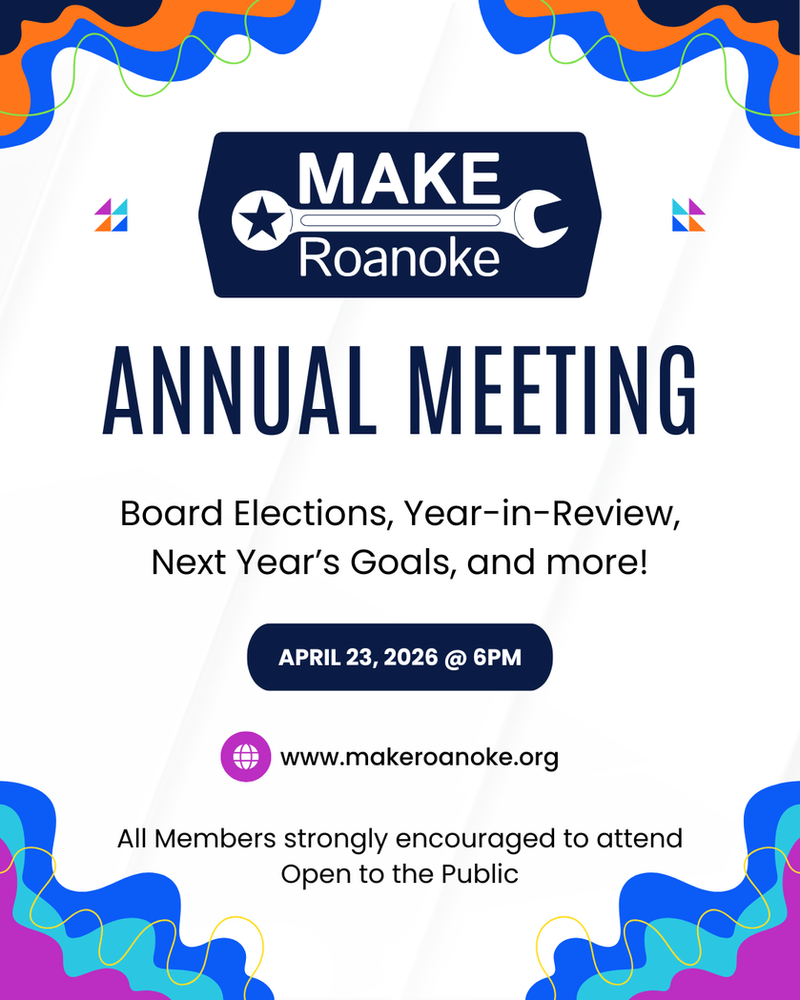
MAKE Roanoke Annual Meeting
🇺🇸 · MAKERoanoke · samantha73556

MAKE Roanoke's Annual Meeting is April 23, 2026 at 6 PM! This event is just once a year and is our opportunity to share how the organization is doing and what our goals are for the next year with our membership and the community at large. This meeting is open to the public, and all MAKE Roanoke members are strongly encouraged to attend. This meeting is taking the place of our April Community Meeting. Unlike our usual Community Meetings which focus on the month prior and ahead, the Annual...

PostsMember Resource

April

🇨🇭 · Queer feminist kompitreff · sp!t

Fr/fr/ven 03.04.2026 11 – 17 h Die Feministische Bibliothek ist offen! ~ the feminist library is open ~ la bibliothèque féministe est ouverte 🪸🪷🪷🎊 Do/thu/jeu 16.04.2026 18 – 20 h Die Feministische Bibliothek ist offen! ~ the feminist library is … Weiterlesen →

feminist libraryfeministische bibliothekfem_bibLesungSp!tspit meetingsaudre lordebibliothèque féministe baselBlack feminismsenglishfeminismfeminist library baselfeministische bibliothek baselintersectionsIntersektionenlesbianlesbischqueer feminismqueer-feministischreadingSchwarze feminismensp!tSp!t - espace pour des matières et pratiques queer-féministesSp!t - Raum für queer-feministische Anliegen und PraxenSp!t - space for queer feminist matters and practices

Radiona.org @ CUC CARNET 2026

🇭🇷 · RADIONA · deborah

CUC CARNET konferencija najveće je nacionalno okupljanje obrazovne i istraživačke zajednice u području primjene digitalnih tehnologija. Konferencija svake godine okuplja nastavnike, edukatore, istraživače i stručnjake iz ICT sektora s ciljem razmjene znanja, iskustava i primjera dobre prakse u digitalnom obrazovanju. Radiona će sudjelovati na ovogodišnjem izdanju konferencije koje se održava od 14. do 17. travnja 2026. , na poziv organizatora. Radionu će predstavljati Deborah Hustić i Goran Mahovlić. Sudjelovanje na CUC-u vidimo kao priliku za razmjenu iskustava i povezivanje s obrazovnim sektorom, kao i za otvaranje novih prostora suradnje u području tehnologije, umjetnosti i edukacije. Kroz svoj rad Radiona kontinuirano razvija DIY/DIWO pristupe, STEAM edukaciju i eksperimentalne formate učenja, koje nastojimo povezivati s različitim obrazovnim kontekstima — formalnim i neformalnim. Više: https://radovi2026.cuc.carnet.hr/

najavacarnetcuc 2026cuc carnetkonferencija

IFS 1792

🇩🇪 · Mainframe · Markus Framer

Support MAKE Roanoke every time you shop at Kroger!

🇺🇸 · MAKERoanoke · samantha73556

MAKE Roanoke is a registered Non Profit with Kroger! You can follow these steps to link your Kroger Rewards card to MAKE Roanoke, and Kroger will donate a little bit of money to us each time you checkout at no extra cost to you! You only have to do these steps one time, and then just remember to scan your Kroger Rewards card at checkout! Go to kroger.com and sign into your Kroger Account Click your name in the upper right corner and select "My Account" Select "Community Rewards" from the...

Posts

Makers Mail April 2026

🇺🇸 · Lowell Makes · admin

Gel print by maker Pete C. Get makers Mail Delivered to Your Inbox! Sign up for our mailing list to receive our monthly newsletter. Sign up April at Lowell Makes is all about sharing skills, connecting with the community, and making the most of the space. Our biggest event of the year, Mill City Skill Share , is happening this Saturday, April 11th . The full schedule is now live, so it’s time to plan your day, register, and get ready for a packed lineup of demos, workshops, and hands-on learning. Around the space, there are plenty of ways to plug in. From Board Game Nights and LEGO Build Night to our Monthly Social and Members Meeting , April is full of low-key opportunities to meet other makers and spend time in the community. We’re planning another Creative Reuse trip in early May, and we’re also introducing Workshop Sundays , a new monthly meetup designed for collaboration, skill-sharing, and getting unstuck on projects. Want to give tours? Our next tour guide training is on May 6th. In shop and committee news, we’re excited to welcome Shawn Ashe and Penny Ruby to ExCom, with Penny also stepping into a new role as Co-Captain in Rapid Prototyping. Over in FAMM, three new sewing machines are now available, giving members even more tools to work with. And Ceramics just added a new wheel ! Be sure to check out our upcoming committee meetings , classes , meetups , and community events , including a craft rave hosted by Mosaic Lowell. Read the Full April Newsletter The post Makers Mail April 2026 first appeared on Lowell Makes .

Newsletter

Gemütliche Runde und Talk über unabhängige(re) Browser

🇩🇪 · Subraum · ahorn

Gemütliche Runde und Talk über unabhängige(re) Browser Bereits am 28.03.2026 erfolgte unser dritter DI -Day in Paderborn. Trotz des Regenwetters durften wir interessierte Besuchende begrüßen und uns über einen angeregten fachlichen Austausch bis in die technischen Tiefen freuen. Das Augenmerk lag auf der Vorstellung des Browsers Firefox mit Empfehlungen zu nützlichen Erweiterungen. Das vortragende Vereinsmitglied ahorn wies zudem auf aktuelle Problematiken hinsichtlich der Unabhängigkeit diverser beliebter Browser hin, da diese oft im Hintergrund von Big Tech finanziert werden und nur auf den ersten Blick unabhängig erscheinen. Die Folien zum spannenden Vortrag inklusive Empfehlungen und Erläuterungen zu den gängisten Einstellungen findet ihr hier . Das nächste Mal finden wir uns wie gehabt am Sonntag, den 03.05.2026 um 15:00 Uhr Uhr in der Kulturwerkstatt (Bahnhofstraße 64, 33102 Paderborn) zusammen. Zum 4. DI -Day werden wir uns dem Thema “Von Big-Tech-Karten zu Open Street Map” widmen und uns gemeinsam mit euch eine unabhängige Alternative zu beliebten Kartendiensten wie Google Maps anschauen.

Radiona.org @ CUC CARNET 2026

🇭🇷 · Radiona · deborah

CUC CARNET konferencija najveće je nacionalno okupljanje obrazovne i istraživačke zajednice u području primjene digitalnih tehnologija. Konferencija svake godine okuplja nastavnike, edukatore, istraživače i stručnjake iz ICT sektora s ciljem razmjene znanja, iskustava i primjera dobre prakse u digitalnom obrazovanju. Radiona će sudjelovati na ovogodišnjem izdanju konferencije koje se održava od 14. do 17. travnja 2026. , na poziv organizatora. Radionu će predstavljati Deborah Hustić i Goran Mahovlić. Sudjelovanje na CUC-u vidimo kao priliku za razmjenu iskustava i povezivanje s obrazovnim sektorom, kao i za otvaranje novih prostora suradnje u području tehnologije, umjetnosti i edukacije. Kroz svoj rad Radiona kontinuirano razvija DIY/DIWO pristupe, STEAM edukaciju i eksperimentalne formate učenja, koje nastojimo povezivati s različitim obrazovnim kontekstima — formalnim i neformalnim. Više: https://radovi2026.cuc.carnet.hr/

najavacarnetcuc 2026cuc carnetkonferencija

Artemis II Mission Day 6 Recap April 6

🇺🇸 · Huntsville Alabama L5 Society (HAL5) - Project HALO · National Space Society

By Burt Dicht NSS Space Coast Correspondent Artemis II Dashboard (as of 11:30 am EDT) THE HISTORIC LUNAR FLYBY Flight Day 6 in deep space — The Artemis II mission completed a historic seven-hour lunar flyby — humanity’s first return to the Moon since Apollo 17 in 1972, capturing images of the lunar far side. RECORD BROKEN: FARTHEST HUMANS HAVE EVER TRAVELED FROM EARTH At 1:56 p.m. EDT, the Artemis II crew surpassed the distance record for human spaceflight’s farthest distance from Earth, eclipsing the Apollo 13 record of 248,655 miles set in 1970. The spacecraft reached a maximum distance of 252,760 miles from Earth. Following the milestone, CSA astronaut Jeremy Hansen delivered emotional remarks from aboard Orion: “From the cabin of Integrity here, as we surpass the furthest distance humans have ever traveled from planet Earth, we do so in honoring the extraordinary efforts and feats of our predecessors in human space exploration. We will continue our journey even further into space before Mother Earth succeeds in pulling us back to everything that we hold dear. But we most importantly choose this moment to challenge this generation and the next to make sure this record is not long-lived.” THE FAR SIDE OF THE MOON — THROUGH HUMAN EYES FOR THE FIRST TIME NASA astronaut Christina Koch described seeing the Moon out Orion’s window and sensing something different from what she’d always known on Earth. “The darker parts just aren’t quite in the right place,” she said. “And something about your senses that is not the moon that I’m used to seeing.” She and the crew compared their views to their study materials, with Koch noting: “That is the dark side. That is something we have never seen before.” Canadian astronaut Jeremy Hansen radioed back with pure excitement during observations: “It is blowing my mind what you can see with the naked eye from the Moon right now. It is just unbelievable.” Christina Koch offered a vivid description of the lunar craters : “What it really looks like is like a lampshade with tiny pinprick holes and the light shining through. They are so bright compared to the rest of the Moon.” Lunar science lead Kelsey Young responded with elation from Mission Control: “ Oh my gosh, that was an amazing picture you just painted. Those types of observations are things that humans are uniquely able to contribute, and you just really brought us along with you.” HOW THE CREW OBSERVED THE MOON — TEAMS, TOOLS & TARGETING The seven-hour observation period was a carefully choreographed scientific operation, years in the making — not just four astronauts gazing out a window. Working in Pairs The crew worked in pairs throughout the flyby, beginning with Wiseman and Hansen at the windows. One astronaut was tasked with taking photos while the other provided naked-eye descriptions of features on the lunar surface. After about an hour, the pairs would switch to keep everyone refreshed and focused across the full seven-hour event. At any given time, the photographer used a blue shroud to prevent reflections and a zoom lens, while the observer used a portable computing device to make written annotations — with both astronauts also making audio recordings of what they were seeing. The pair not at the windows used the downtime to eat, exercise, or prepare for their next shift. The crew carried three cameras: two Nikon D5 DSLRs and a Nikon Z9 mirrorless camera added at nearly the last moment. Each press of the shutter produced three exposures at different brightness levels to ensure at least one image would turn out well, and they used a 400-millimeter lens to capture as much lunar detail as possible. The Lunar Targeting Plan Custom software built specifically for Artemis II guided every shift. The Lunar Targeting Plan was fine-tuned to the exact lighting conditions on the Moon’s surface during the flyby and to the crew’s precise viewing angle as Orion hurtled through space. Like a spacewalk plan, it provided strong, detailed guidance while leaving flexibility for real-time decisions. Targets were prioritized by both scientific value and visibility at the moment of observation. The final list contained 30 targets spanning 10 science objectives, with key focus areas including the Orientale and Hertzsprung impact basins on the far side. One major advantage over robotic missions: by observing the same targets more than once at different points during the flyby, the crew could document features under shifting illumination conditions, something that would take an orbiting spacecraft weeks or months to replicate. How Did They Do? A lively stream of observations was received with grins, nods, and lots of chatter in the Science Evaluation Room. The crew reported color nuances that will help enhance scientific understanding of the Moon. Standout moments included Glover radioing his fascination with the lunar terminator — “There’s just so much magic in the terminator — the islands of light, the valleys that look like black holes,” and providing Mission Control with critical topography comparisons between the lunar north and south poles to inform future landing missions. Koch offered sharp scientific observations from her very first moments at the window, noting the Earth’s noticeably higher brightness compared to the Moon while both were simultaneously visible, a genuine comparative data point for scientists. The science team will debrief fully with the crew on Tuesday, April 7. Scientists are already reviewing imagery, audio, and other data to determine the best times and locations of meteoroid impact flashes and will seek input from amateur observers who were watching the Moon at the same time. COMMUNICATIONS BLACKOUT — 40 MINUTES OF SILENCE As Orion traveled behind the Moon, the crew witnessed an “Earthset” — the moment Earth dropped below the lunar horizon. Orion entered a planned communications blackout from 6:44 to 7:25 p.m. EDT as it passed out of Earth’s direct line of sight. The first photo from the far side of the Moon captured from Orion showed Earth dipping beyond the lunar horizon — an “Earthset” bearing a striking resemblance to the iconic “Earthrise” photo taken during Apollo 8 in 1968 (see featured photo at top of blog). When communications were restored, Koch captured the emotion of the moment: “It is so great to hear from Earth again. We will always choose Earth; we will always choose each other.” SOLAR ECLIPSE FROM DEEP SPACE After emerging from behind the Moon, the crew observed a total solar eclipse from 8:35 to 9:32 p.m. as Orion, the Moon, and the Sun aligned. The crew used the opportunity to study the solar corona glowing around the lunar edge and watch for flashes from meteoroid impacts on the surface. Pilot Victor Glover described the breathtaking sight: “We just went sci-fi. It just looks unreal.” Commander Wiseman described it as the surprise of the day: “ We just came out of an eclipse. We could see the corona of the sun, and then we could see the planet train line up with Mars. And all of us commented how excited we are to watch this nation and this planet become a two-planet species.” A TOUCHING TRIBUTE — TWO CRATERS NAMED The crew suggested naming two craters on the Moon. The first was named after their spacecraft, Integrity. The second honored Commander Reid Wiseman’s late wife, Carroll, who passed away in 2020 after a battle with cancer. Jeremy Hansen, visibly emotional, announced it: “ We lost a loved one. Her name was Carroll. The spouse of Reid, the mother of Katie and Ellie. It’s a bright spot on the moon. And we would like to call it Carroll.” The crew shared a long group hug afterward UNDERSTANDING THE FREE RETURN TRAJECTORY “Please be informed there is a Santa Claus.” Those famous words were uttered by Jim Lovell, who was reporting to Mission Control that Apollo 8’s Service Propulsion System had successfully completed its Trans-Earth Injection (TEI) burn. The burn was performed while the spacecraft was out of radio contact behind the Moon. When the spacecraft came back into view of Earth and communications resumed with NASA’s Mission Control Center, Lovell calmly reported in his own unforgettable way that the burn had been successful, much to the jubilation of those in mission control. Unlike Orion’s free-return trajectory, Apollo 8 had actually left the free-return path once it entered lunar orbit. That meant the crew had to fire the Service Propulsion Engine to leave lunar orbit and begin the journey home. If the engine had not fired correctly, the crew could have been stranded in lunar orbit. The Artemis II mission was designed differently from Apollo 8 and represented one of the most elegant ideas in spaceflight. Rather than entering lunar orbit and then requiring a powered burn to begin the journey home, Orion traveled on what NASA called a free-return trajectory — a carefully planned loop that allowed the gravity of the Moon to bring the spacecraft back home. A simple way to picture it was to imagine throwing a ball past a corner so perfectly that the curve of the wall sent it arcing back toward you. In this case, the “wall” was the Moon’s gravity. After launch, Orion first circled Earth while the crew and mission controllers verified that every system was working properly. Once everything checked out, the spacecraft performed a major burn that sent it out toward the Moon. From that point forward, the trajectory itself did much of the work. As Orion approached the Moon, it did not enter orbit. Instead, it swung around the far side in a graceful arc. The Moon’s gravity bent its path, turning the spacecraft back toward Earth. It became a vast celestial loop — almost like drawing a figure eight between Earth and the Moon. What made this especially remarkable was that this path also served as a built-in safety feature. Even if Orion had lost major propulsion capability after leaving Earth orbit, the laws of celestial mechanics would still have carried the crew around the Moon and back home. In a very real sense, gravity became part of the mission’s safety system. For those of us who grew up in the Apollo era, watching Artemis trace this path around the Moon was profoundly moving. The hardware was new, the spacecraft was different, but the sense of wonder was the same. More than fifty years later, humanity once again reached beyond Earth, reminding us that the dream that began with Apollo still lives on. WHAT’S NEXT — FLIGHT DAY 7 PREVIEW The crew’s wake-up time was 11:35 a.m. EDT. Today is a science downlink day, the astronauts will meet and conference with the Artemis II Lunar Science Team to discuss and review all of their observations from yesterday’s flyby, while the experience is still fresh in their minds Orion will exit the lunar sphere of influence in the afternoon, at which point Earth’s gravity will once again have a stronger pull on the spacecraft than the Moon’s. NASA That exit is expected at approximately 1:25 p.m. EDT, at a distance of 41,072 miles from the Moon. In the second half of the day, Orion’s engine will fire for the first of three return trajectory correction burns, adjusting the spacecraft’s path for the journey home. The rest of the day will be largely off-duty for the crew, giving them a chance to rest before their final tasks ahead of reentry. Splashdown remains on track for approximately 8:07 p.m. EDT on Friday, April 10, off the coast of San Diego, where recovery teams will retrieve the crew by helicopter and deliver them to the USS John P. Murtha.

MoonNASA