🇩🇪 · Subraum · snowball
Zum 1010₂-ten Internationalen Tag (und Nacht!) des offenen Hackerspaces öffnen am 25. März über sechzig Hackerspaces wieder die Türen und laden Neugierige und Wissbegierige ein, uns in unseren natürlichen Habitaten zu besuchen. Auch wir laden dazu in unsere Vereinsräume ein, um mit echten Nerds und Hackerinnen zusammenzukommen und dabei zu sein, wenn wir mit Euch gemeinsam Hardware und Hackingmythen zerlegen. Egal ob du dich für künstliche Intelligenz interessierst oder für Datenschutz und offene Software; ob du lieber mit Holz, Metall und Leder baust statt mit der Tastatur; ob du kreativ bist mit buntem Licht, Schneidplotter oder Textil ‒ bei uns findest du sicher jemanden mit ähnlichen Interessen. Komm auf einen Kaffee vorbei oder bring deinen Laptop mit und lass dich länger nieder. Ein interessantes Projekt findest du bestimmt bei uns! Als Gesprächsanstoß wird es einige Vorträge geben: „Shamir Secret Sharing“ (Kryptographie), „Versions- und Dateiverwaltung mit git“ und „ChatGPT produktiv nutzen“. Außerdem präsentieren wir einige Projekte, die bei uns oder in der Open Source Community entstanden sind. Wenn du an dem Tag nicht in Paderborn sein kannst, schau doch mal, ob es auch in deiner Stadt oder deinem Land einen Hackerspace gibt. Auf dieser Karte findest du jeweils Links zu den teilnehmenden Spaces. Dabei sind die Hackerspaces so divers wie die Städte, in denen sie gewachsen sind, und wie die Leute, die in ihnen heimisch geworden sind ‒ und Ihr könnt der Anstoß für eine ganz eigene Forschungs-, Bastel- oder Philosophie-Nische in Erfas oder Chaostreffs in Eurer Nähe werden. Denn diese Spaces stehen für einen kreativen Umgang mit Technik, sind aber auch Orte, um endlich normale Leute zu treffen. Kommt zahlreich! Die wichtigsten Infos im Überblick: am Samstag, 25. März 2023, ab 13 Uhr Vorträge zwischen 15 und 16 Uhr Im Subraum in der Westernmauer 12-16, 33098 Paderborn. Eine Wegbeschreibung mit Foto findest du hier . Abweichend von unserer sonstigen Regelung gilt an dem Tag keine Maskenpflicht. Du darfst natürlich gerne eine Maske tragen, wenn du das möchtest. Falls du dicht nicht gut fühlst oder deutliche Krankheitssympthome zeigst, würden wir dich bitten an dem Tag zu Hause zu bleiben und stattdessen z.B. Mittwochs zum Open Chaos vorbei zu kommen. Bei Rückfragen kannst du uns unter mail@c3pb.de erreichen.
🇨🇦 · UOttawa Richard L ’Abbé Makerspace · Anonymous
Examining anti-racism content in Indigenous health education Anonymous Wed, 03/15/2023 - 13:58 home University of Ottawa Examining anti-racism content in Indigenous health education June 17, 2022 Professor Agnes Grudniewicz, and two Telfer MHA students, Maddie Venables and Amanda Larocque, received a School of Management Indigenous Research Support Grantto develop an anti-racism assessment tool for medical education curricula. An article from the Telfer School of Management, by Kelsey Oldland Professor Agnes Grudniewicz , and two Telfer MHA students, Maddie Venables and Amanda Larocque, received a School of Management Indigenous Research Support Grant to develop an anti-racism assessment tool for medical education curricula. While there have been efforts to integrate Indigenous knowledge into medical education and to reduce racism in health care, these efforts have not been systematically evaluated. This study will support the development of an assessment tool to advance the dismantling of anti-Indigenous racism in health care. The team is working closely with Indigenous communities in all phases of the research. They will use a mixed methods approach that includes a scoping review, survey, and interviews. Surveys will be sent to all 17 Canadian medical schools to identify current practices with respect to Indigenous health teachings and to the delivery of anti-racism curricula. One-on-one interviews with medical faculty will dig deeper into the concepts discovered in the survey. What will the research contribute? Part of the motivation for this project stems from historical injustices committed against Indigenous peoples, which continue in many forms to this day. The team will be partnering with the Gesgapegiag Health and Community Services (GHCS) organization, which provides health promotion, prevention, education, as well as clinical and community services, to its members. This tool will be used to support the Chief and Council of Gesgapegiag, who are mandated to support anti-oppressive practices. It will also help ensure that the education curriculum given to future medical students reflects the community-based values of Indigenous peoples.
🇨🇦 · UOttawa Richard L ’Abbé Makerspace · Anonymous
uOGRADflix winners: Meet the next generation of research Anonymous Wed, 03/15/2023 - 13:58 home University of Ottawa uOGRADflix winners: Meet the next generation of research December 7, 2021 What do Antarctic algae, physical exercise and children’s resilience have in common? They’re all topics of videos that took prizes at the first edition of the uOGRADflix competition, organized by the Office of the Vice-Provost, Graduate and Postdoctoral Studies. The competition aims to help graduate students popularize their work and develop the ability to communicate effectively with diverse audiences, showing originality and talent! Competition participants skillfully met the challenge of explaining their research projects clearly and concisely (in one minute or less!). While highlighting the breadth of on-campus research, the competition celebrates graduate students’ accomplishments. First uOGRADflix winners First place: Galyna Vakulenko Galyna Vakulenko, a biology master’s student, won the first edition of uOGRADflix. She is studying analgae that survives in the harsh conditions of Antarctica’s Lake Bonney, to better understand the effects of climate change on this region. In addition to winning a cash prize of $1,000, Galyna Vakulenko will represent uOttawa at a provincial competition next spring. Second place and people’s choice award: Sitara Sharma Sitara Sharma, a second year master of human kinetics student, took second place as well as the peoples’ choice award. Her research examines the role of physical activity in reducing cancer-related cognitive impairment and subsequently improving young survivors’ quality of life. Sitara Sharma received two cash prizes, one of $750 and the other of $500. Third place: Catherine Potter Catherine Potter, a Saint Paul University counselling and spirituality master’s student, took third place. Her research studied the DREAM program, an eight-week summer camp, to determine whether the children’s experience helped improve their resilience and mitigate the deterioration of their mental health during the pandemic. She won a cash prize of $500. See the winners’ and finalists’ videos . There are 25 of them, but it’ll take you less than 25 minutes to watch them all!
🇨🇦 · UOttawa Richard L ’Abbé Makerspace · Anonymous
So much to read, so little time! University Librarian Talia Chung shares her literary inspirations to mark Asian Heritage Month Anonymous Wed, 03/15/2023 - 13:58 home University of Ottawa So much to read, so little time! University Librarian Talia Chung shares her literary inspirations to mark Asian Heritage Month May 5, 2021 To mark Asian Heritage Month, the University of Ottawa Library invites you to get to know some of their staff members who are proud of their Asian heritage. In this Q&A, meet Talia Chung, University librarian and vice-provost (knowledge systems). Celebrated since May 2002, Asian Heritage Month is an opportunity to honour, among other things, the wonderful contributions of Canadians of Asian descent. This year’s theme, Recognition, Resilience, and Resolve , is a fitting one: the dramatic rise in anti-Asian racism since the beginning of the pandemic has caused a myriad of emotions but has also empowered those in the community and their allies to speak out against racism and discrimination. The University of Ottawa Library is marking the month by featuring some of their staff members who are proud to share parts of their Asian heritage. One such member is Talia Chung, University librarian and vice-provost (knowledge systems). Talia was appointed to the position in October 2018. Prior to that, she served as Associate University Librarian (AUL) for Research Services, she was director of the Health Sciences Library and head of the Geographic, Statistical and Government Information Centre at Morisset Library. In this interview, Talia discusses her family’s immigration to Canada, the people who most inspire her and her evolving role at the Library. This year, how will you be marking Asian Heritage Month? TC: Like everyone else these days — in a COVID-19 safe way! More seriously, my Asian heritage is never really very far from my day-to-day. If anyone is looking for suggestions as to how to mark the month, I’d be delighted to share some suggestions. Because I am a librarian, my reflex is to recommend books! In the last year, I very much enjoyed Ann Hui’s cultural travelogue of Canada entitled, Chop Suey Nation: The Legion Café and Other Stories from Canada’s Chinese Restaurants , as well as Mark Sakamoto’s family memoir, Forgiveness: A Gift from My Grandparents . It would be wrong of me not to mention uOttawa alum Vincent Lam’s Bloodletting and Miraculous Cures — a wonderful read and winner of the 2006 Scotiabank Giller Prize. Dr. Lam has also been providing insightful commentary over the last year on the pandemic situation from a physician’s perspective. So much to read, so little time! Tell us something about yourself that others may not know. TC: Many are surprised when they learn that I was born in Brazil to parents who were originally from southern China. Our family’s immigration story began in southern China, then to Hong Kong, followed by some years in Brazil (where I was born), and finally ended on a November evening when we landed on the tarmac in snowy Montreal. Arriving amidst the frigid conditions in Canada was quite a shock to a family more accustomed to warm weather! Growing up in Montreal, I was so fortunate to have been exposed to a rich linguistic and cultural world. Home was in Mile-End, friends were found in Chinatown and in Rosemont, culture was spread across the city. I was surrounded by francophone neighbours and friends, I studied and watched TV in English, and homelife mostly took place in Chinese. I sometimes question whether I have a mastery over any of these languages, but I certainly feel lucky that I’m able to enter these worlds by virtue of some language skills. Tell us about someone who inspired you and why. TC: Wow — where do I start? This is a tough question as I’m someone who easily finds something inspiring or interesting in just about everyone that I meet. Whether it’s a particular talent, or demonstration of courage, or cleverness in the way someone expresses themselves, most days I feel surrounded by inspiring individuals, most notably my library team. I’ve recently read a couple of books about trailblazing Canadian women who broke through barriers to serve on Canada’s highest court. The first book is Two Firsts: Bertha Wilson and Claire L’Heureux-Dubé at the Supreme Court of Canada written by uOttawa Law professor Constance Backhouse. Professor Backhouse documents the challenges, and discrimination that Claire L’heureux-Dubé and Bertha Wilson experienced as they progressed through their legal careers, eventually to be the first women appointed to the Supreme Court of Canada. I also adored former Chief Justice of the Supreme Court, Beverly McLachlin’s biography Truth Be Told: My Journey Through Life and the Law in which she talks about the importance, during her youth, of the Pincher Creek Municipal Library in her intellectual life. These stories are so important as they remind us all how hard-fought, and recently won, are the advancements of women’s rights in Canada but that there is still, “ du chemin à faire ”. Inspiring women with whom I’d love to sit down for a long chat (and a good meal)! What do you like the most about your career? TC: When I started out, I imagined this career would lead me to mostly solitary work. I imagined spending hours cataloguing or indexing, or coding in the emerging area of library systems. As it turned out, I tired of solitude quickly. I learned that I craved collaborative work with lots of different people, preferably working with a wide variety of information and with a smattering of technology to keep the work fresh and challenging. I’ve been tremendously fortunate to have explored many, many facets of library work. It has also been fascinating to watch the changing roles of librarians and the value proposition of libraries within their user communities and within their parent institutions. The mission of libraries is persistent so long as people continue to ask questions and seek answers. What's the most generous act you’ve seen recently? TC: Maybe it’s the moment in which we’re currently all living, but I am hugely thankful to the frontline healthcare workers doing their best and risking their lives to respond to needs created by the COVID-19 pandemic. In smaller ways, I have seen strangers extend kind words and gestures to each other. Because of the pandemic, my neighbourhood suddenly feels even more closely knitted. A very memorable moment was when the neighbour of a neighbour, who happens to be a cellist with the NAC, offered our block an impromptu sidewalk performance. It was soul-nourishing! We invite you to meet the other members of the Library. You can read their interviews here .
🇨🇦 · UOttawa Richard L ’Abbé Makerspace · Anonymous
The “One Health” approach: uOttawa’s expertise is recognized Anonymous Wed, 03/15/2023 - 13:58 home University of Ottawa The “One Health” approach: uOttawa’s expertise is recognized August 10, 2022 Earlier this year, the International Development Research Centre (IDRC) was awarded nearly $5 million in funding for the "One Health" project on epidemics involving researchers from the University of Ottawa. For the launch of the DOPERAUS project (Decentralize and Make Operational the "ONE HEALTH" Platforms), two researchers from the University of Ottawa, Stéphanie Maltais and Rodrigue Innocent Deuboue Tchialeu were respectively present in Conakry and Kinshasa along with other international researchers and members of government ministries. In 2021, the International Development Research Centre of Canada (IDRC) launched the Collaborative One Health Research Initiative on Epidemics (COHRIE) in an effort to understand and show how One Health research on emerging epidemic threats can help protect human health and livelihoods, strengthen local food systems, and promote environmental sustainability. An award of $5 million was granted to Professor Sanni Yaya and his research team, who work in collaboration with researchers in Guinea and the Democratic Republic of the Congo, to decentralize and implement One Health platforms in these two countries heavily burdened with diseases of epidemic potential and other endemic diseases. DOPERAUS project launches On June 10, 2022, Stéphanie Maltais , postdoctoral fellow at the University of Ottawa and member of Professor Yaya’s team was in Conakry for the official launch of the DOPERAUS (Decentralize and Operationalize the “ONE HEALTH” Platforms) project, under the auspices of the Ministry of Health and Public Hygiene and in collaboration with principal researchers Professor Alpha Kabinet Keita and Dr. Abdoulaye Touré. The launch was an opportunity to discuss the problem of zoonoses in Guinea, especially the recent emergence of the avian flu in the country. In her opening speech, the Secretary General of the Ministry of Agriculture and Livestock welcomed the implementation of this integrative and innovative project that will allow both Canada and Guinea to join and create collaborative relationships to fight zoonotic diseases. Also, on July 7, Rodrigue Innocent Deuboue Tchialeu , a researcher from the University of Ottawa and member of Professor Yaya’s team, attended the launch of the project in Kinshasa, alongside the country’s principal researchers, Drs. Justin Masumu and Sheila Makiala. The Minister of Public Health, Hygiene and Prevention, Dr. Jean-Jacques Mbungani Mbanda, took the opportunity to underline the importance of comprehensive management of epidemic-prone diseases—such as Ebola—and encouraged all partners to support the project, thus empowering all actors in the fight against epidemics and emerging diseases. An additional $1 million for continuous learning The University of Ottawa team, led by Professor Sanni Yaya , received an additional $1 million grant from IDRC to coordinate all knowledge mobilization, capacity building, and the networking of research teams in four COHRIE projects: the DOPERAUS project as well as three other projects in Colombia, Ecuador, Guinea, Liberia, Nigeria, Uganda, Peru, and Sierra Leone. In order to ensure continuous learning, the use of the project results, as well as regional and global outreach, the team aims to organize communication and knowledge transfer activities for the entire COHRIE cohort, as well as local actor engagement activities to help policy-makers improve national and regional policies, as well as provide training and capacity-building activities in sex and gender analysis, sex-transformative research, scientific knowledge transfer and popularization, and policy-maker engagement. The University of Ottawa will coordinate the project while working with local organizations, which in turn will be contracted to conduct engagement activities with participating parties in each country. The COVID-19 pandemic underscored the importance and relevance of the “One Health” concept in understanding and addressing global health risks. Through the expertise of its researchers, the University of Ottawa actively contributes to multi-sectoral partnerships at the international level to develop strategies to combat serious disease and large-scale health threats.
🇨🇦 · UOttawa Richard L ’Abbé Makerspace · Anonymous
University governance is everyone’s business: A profile of two Board of Governors members Anonymous Wed, 03/15/2023 - 13:58 home University of Ottawa University governance is everyone’s business: A profile of two Board of Governors members December 14, 2022 Different groups handle leadership and good governance at the University of Ottawa, including the Board of Governors. In 2022, Kafia Barkat and Marianne Saikaley were elected to the board to fill the two vacant support staff positions. They discuss what motivated them to run and what they intend to contribute to the board. Different groups handle leadership and good governance at the University of Ottawa, including the Board of Governors, which makes financial decisions and establishes the rules necessary for sound management at uOttawa. In 2022, Kafia Barkat and Marianne Saikaley were elected to the board to fill the two vacant support staff positions. They discuss what motivated them to run and what they intend to contribute to the board. An open, inclusive discussion space Barkat and Saikaley are both enthusiastic about the board as a space for discussion and sharing of different points of view. For Barkat, communication not only ensures mobilization but also the expression of diverse voices. “We have to stay informed, learn from each other, express ourselves and ask questions,” she says. Working with the special adviser, antiracism and inclusive excellence, she’s been able to see the influence the University community can have, particularly when it speaks up and becomes active through petitions, open letters and calls to action. She knows from experience that activism can change things. As for Saikaley, what motivated her was the 2020 SSUO strike as well as the pandemic, two periods of uncertainty that left support staff with very few options to meet and discuss what was going on. With communication very difficult, she felt she had to act. Saikaley quickly created a Facebook group to maintain and facilitate exchanges within her community. This experience wasn’t only educational, but it also encouraged her to get more involved. “I’ve been working at the University for nearly 15 years and I really want to see it grow and succeed ... so when the Board of Governors launched the call for nominations, I felt it was time for me to run.” Diverse voices in the decision-making process: An essential element Comprised of up to 32 members, including two full-time support staff, the board governs and oversees business management at the University. For example, it approves the annual budget, sets tuition fees, adopts policies and defines the mission, vision and values of the University. With their strong knowledge of University issues, Barkat and Saikaley intend to contribute to different aspects of the Board’s work by pursuing the objectives they set for themselves when they ran. Saikaley would like to improve communication with support staff concerning major decisions and initiatives, to represent her colleagues and to have their voices heard so as to strengthen employee participation in decision-making processes. As for Barkat, she would like to offer a vision of diversity and raise the board’s awareness of questions affecting the University community, to further transparency and rigour within the board. After their first meeting, they both feel that the position requires conscientious work. They also feel that the board is welcoming and well-organized, and supports its members.
🇨🇦 · UOttawa Richard L ’Abbé Makerspace · Anonymous
The University of Ottawa makes a monumental leap in global higher education ranking Anonymous Wed, 03/15/2023 - 13:58 home University of Ottawa The University of Ottawa makes a monumental leap in global higher education ranking June 16, 2021 The University of Ottawa makes a monumental leap in the latest 2022 QS World University Rankings. The University of Ottawa jumped 49 spots in the prestigious QS World University Rankings for 2022 , placing it among the top postsecondary institutions in the world. uOttawa leapt to 230 th position, placing it in the top 20 percent of institutions of higher learning around the world. This is a major feat and the greatest improvement of the U15 universities. uOttawa made a similar leap in the Times Higher Education (THE) World University Rankings 2020 , demonstrating its ever-growing strength on the world’s stage, now in 145 th position. In Canada, uOttawa ranks 9th among the country’s U15 research universities. This is no surprise, given that the University has continued to climb in the Tri-Council funding, moving into 6 th position nationally. Two key factors can explain our significant move up in the international rankings. First, uOttawa climbed 44 spots in the citation per faculty member indicator. This places the University in 79 th position, which confirms the upward trend for research at our institution. This year, Quacquarelli Symonds (QS) improved their methodology by selecting more carefully the citations that count towards the indicator, placing more weight on academic citations in the arts and humanities than in previous years. Second, the University now sits in 204 th position for its international student ratio, a leap of some 40 spots compared to last year. The QS global ranking assigns specific importance to this factor: it reflects an ability to attract students from across the globe and speaks to international brand. “The University of Ottawa is going from strength to strength in research prominence and internationalization, and this is reflected in this year’s rankings,” said President and Vice-Chancellor Jacques Frémont. “I am proud of our significant rise in the global rankings. This success is thanks to all the members of our university community.” Learn more about the QS World University Rankings .
🇨🇦 · UOttawa Richard L ’Abbé Makerspace · Anonymous
Franco-Ontarian perspectives in green and white Anonymous Wed, 03/15/2023 - 13:58 home University of Ottawa Franco-Ontarian perspectives in green and white September 20, 2021 In order to show the range of different Franco-Ontarian experiences, the Office of the Vice-Rector, International and Francophonie is giving the floor to Franco-Ontarians, members of the university community. Celebrated on September 25 since 2010, Franco-Ontarian Day is dear to the heart of Francophones and Francophiles. At the University of Ottawa, we want to highlight this day and remind the entire university community of the importance of the Ontario's Francophonie, which is at the heart of our mission. The Franco-Ontario Day is celebrated in many ways: some people attend festivals, webinars, or purchase books written by Franco-Ontarian authors. Some people take the opportunity to advocate for the rights of Francophones, while taking the pulse of the Francophonie in the Franco-Ontarian community, in order to protect the French language and ensure its sustainability. The Franco-Ontarian reality is rich in its expressions and may vary greatly from one region of Ontario to another. In order to show the range of these different Franco-Ontarian experiences, the Office of the Vice-Rector, International and Francophonie is giving the floor to Franco-Ontarians, members of the university community: Sabrina Leroux, student Honours Bachelor of Social Science in Criminology, Joël Beddows, Professor and Chair of the Department of Theatre, and Rachelle Clark, Director, Wellness and Recreation Sector, Student Affairs. Here are their stories, in their own words – a glimpse into their unique perspectives, their distinct realities. Enjoy the read! Sabrina Leroux, student, Honours Bachelor of Social Science in Criminology "This year, I am celebrating our ancestors, who gave us the opportunity to be taught in French and to have access to services in our mother tongue thanks to their constant struggles to defend our rights as a linguistic minority. "For me, being a Franco-Ontarian means standing tall and being proud of our community’s resilience in ensuring the survival of French in Ontario. More specifically, I am proud of my grand-parents, who overcame major challenges to pass down the French language to their children. Their strength and courage inspire me to fight for my Franco-Ontarian heritage. "Every day, I try to take small measures to continue the battle of my ancestors. Living as a Franco-Ontarian, it takes constant effort to hold fast against the majority and to avoid speaking English in social interactions. When I go to a restaurant, I always start by speaking French to demonstrate the requirement and need for services in French. "Living as a Francophone in Ontario means making a determined effort every day to study in French and work in a bilingual environment. It’s more than a language and a culture; it means being part of a large family." Joël Beddows, associate professor and theater director "I am a professor; I am an artist; I am a citizen. I impart knowledge, I create theatre productions, and I live in French, in Ontario. "This language and its infinite possibilities, like my Franco-Ontarian identity, are vital to both my public and private life. More importantly, they allow me to navigate an increasingly complex social, political, and ideological landscape. "Could I have written these same words 30 years ago, when I was myself a student at the University of Ottawa? I doubt it. At that time, we dreamt of a society where debate and dissension could be appreciated. Diversity in any form was suspect. It was simply more important to speak in a united voice. "I am the happiest of men to have seen a shift to a multifaceted Franco-Ontarian society in my lifetime. Today, Francophones in Ontario embrace plurality. It feels good. It allows us to resist both the stagnation and the conservatisms of yesteryear. It especially allows us to believe in the possibility of another 400 years of French presence in Ontario." Rachelle Clark, director, Wellness and Recreation Sector, Student Affairs “I feel comfortable in my Francophonie at uOttawa. "When someone asks me if I am francophone, I have a standard response. As if apologizing I usually answer: “yes, but I come from a small northern town in Ontario where “the French” are the minority”. This is what is referred to as “Linguistic Insecurity” (Wernicke, 2021), where I believe that my particular linguistic “variety” is not good enough. "However, I have come to learn that my linguistic “variety” is not only acceptable but is an important part of my identify. It tells my story as a Franco-Ontarian growing up in a small town in Northern Ontario where only 12 percent of the population spoke French. It reminds me of my culture, my family, my heritage, my pride and sense of belonging. To me, Being Franco-Ontarian is about celebrating my language, my roots, and a commitment to understanding our history in order to nourish and foster a future where our language and culture can flourish. "From the tourtière , cipaille and pets de sœur from Mémère’s cookbook and lullabies like Frère Jacques and Fait dodo that echo across the generations in my family, being Franco-Ontarian is about being proud of where we come from and where we are heading. "Despite my linguistic insecurity, I am proud of being a Franco Ontarian and have ensured that my daughters grow up as Franco-Ontarians, even though they are also part of the minority in their community. We share our traditions, our songs and our sacred recipes with our anglophone family and neighbours and in doing so, we celebrate our heritage. "At uOttawa, every language is welcome, and every culture is celebrated. On this day, we celebrate you, Franco-Ontarian, regardless of your 'linguistic variety'."
🇨🇦 · UOttawa Richard L ’Abbé Makerspace · Anonymous
Equity and consistency for students from Africa Anonymous Wed, 03/15/2023 - 13:58 home University of Ottawa Equity and consistency for students from Africa February 28, 2022 It’s time for fairness and consistency in welcoming excellence from Africa. Reflections by Sanni Yaya, Vice-President, International and Francophonie, University of Ottawa. Sanni Yaya, Vice-President, International and Francophonie, University of Ottawa Article published on February 24, 2022, Ideas section, Le Devoir Over the past several weeks, the university and college community and many elected officials across Canada, have reacted strongly—and rightly so—to the abnormally high rates of denial of study permits for international students from Africa. Indeed, over the last few years, many study permit applications processed by Immigration, Refugees and Citizenship Canada have often been rejected for unfathomable reasons or have resulted in unusually long processing times. Why are graduate students, with scholarships guaranteed by their institutions and good compliance records, being refused visas if not an implicit bias by application assessment officers convinced of their intention to stay in Canada once their study permits expire? Even more troubling is the fact that students’ applications from francophone African countries are rejected in greater numbers than those of students from other countries. This situation is appalling in many respects. First, for the excellence of training of the African youth, and second, for the excellence and sustainability of education and research institutions in Canada, especially when it comes to the country’s bilingual and francophone universities and colleges. Recently, the House of Commons Standing Committee on Citizenship and Immigration has taken up this matter. The testimonies and reports tabled, including by the University of Ottawa, highlighted the strategic importance of these students, not only for postsecondary institutions’ financial health but also for the entire Canadian labour market. With an international student community of nearly 10,000 from 147 countries, who today represent almost 21% of the student population, the University of Ottawa has seen a dramatic 350% increase in the number of international students enrolled in its 450 programs between 2011 to 2021. Over the same period, the number of international students enrolled in French-language programs has increased more than fivefold. Now representing 25% of the total francophone student population. This achievement is a source of pride for us, and reflects international recognition of our know-how and the quality of our academic project. The presence of these students in our community is a source of diversity and cultural enrichment, and is an illustration of our goal of becoming a university community of convergence. For the University of Ottawa, the unusually high level of denial of study permit applications reveals a lack of equity and, especially, and above all, a lack of consistency in federal policies. Canada’s International Education Strategy (2019–2024), which aims to make Canada one of the top education destinations in the world and to diversify the source of international students, is counting on the recruitment of these same students. However, this is not possible without a true system-wide coherence and coordination, not only within the federal government itself (e.g., Global Affairs Canada; Immigration, Refugees and Citizenship Canada; Employment and Social Development Canada), but with the provinces and territories as well. Bilingual and French-language universities and colleges across the country are being hit hard by systemic barriers that require a complete overhaul of existing processes and procedures. Outside of Quebec, this situation profoundly affects a precarious and fragile balance, that could ultimately threaten the financial viability of Canada’s French-language education and research institutions. Canadian francophone communities are faced with immense challenges (shortage of qualified labour, intergenerational linguistic transfer to English, francophones’ decline in demographic weight, etc.); welcoming students from French Africa - which has an average age of 20 years and the highest growth rate of francophone populations in the world - opens a door to the future. Today, post-secondary institutions must differentiate themselves from their traditional (American and British) as well as non-traditional (Asian) competitors, who prevail as references. One may regret this notion of higher education which contributes to competition to varying degrees among universities. But this is not incompatible with models of internationalization based on co-operation and co-construction. The spread of knowledge and ideas must be matched with the greater mobility of students and researchers. One cannot exist without the other. Universities that are open to the world must be able to welcome the diversity of the world. According to Global Affairs Canada, international students contributed more than $22 billion to the Canadian economy in 2018 and supported more than 218,000 jobs. Welcoming and retaining international students provides universities and society as a whole with the means to develop and grow. For the University of Ottawa, this is an important shift that must take place now. The status quo is no longer an option and the federal government must act, and sometimes that means going back to the drawing board to find creative solutions (the expansion of the federal government’s Student Direct Stream to many other African countries is a good example ) that will allow Canada and its institutions to maintain a world-class education for all students, including those from French-speaking Africa.
🇨🇦 · UOttawa Richard L ’Abbé Makerspace · Anonymous
Students say these profs nailed their online courses Anonymous Wed, 03/15/2023 - 13:58 home University of Ottawa Students say these profs nailed their online courses August 24, 2020 We asked students to nominate professors who knocked it out of the park with their online courses last Winter and Spring-Summer terms after the COVID-19 pandemic hit. Here’s what they had to say about the profs who delivered a stellar virtual learning experience. Before the COVID-19 pandemic hit, 56% of uOttawa students had never taken an online course. So, when all classes moved from in-person to virtual formats in March, it was a big adjustment for many. To help guide you in your quest to find the right online courses this fall, here are a few uOttawa profs who knocked it out of the park when it came to remote learning, as chosen by our students. Prof. Alexandra Pettit (Biology): The guru of learning in small chunks “Professor Alexandra Pettit, in my opinion, did one of the best jobs transitioning to online teaching,” says Sayem Chowdhury, a first-year student in Health Sciences who took Introduction to Cell Biology (BIO1140) last winter. “Pre-recording her lectures and posting them to YouTube was a great idea. There were no interruptions and it was incredibly informative. Plus, rather than posting an entire lecture (1.5 to 3 hours), she broke them up into 20 to 30-minute segments. I found this to be the greatest part of her online teaching. The videos were amazing — not too long that I lost interest and easy for me to go back and review certain topics if needed. “Personally, I learned more from this format. I was more productive and more motivated to study. Studying in multiple small chunks, usually 30 minutes at a time, with breaks in between, is the best way for me to learn and retain information. “The way she implemented the final exam was amazing too. Rather than timing us, she gave us a case study to test our knowledge. The exam was not easy, but it felt fair, which helped me mentally. It’s hard enough as it is to study for classes at home. It felt as if Professor Pettit cared about us and understood the struggles we had.” Prof. Paul Saurette (Political Studies): Creative and resourceful “It's always difficult for a professor to get students to engage during a 9 a.m. course — and even harder when it’s being taught online — but Professor Paul Saurette did such a great job,” says Ayat Ibrahim, a third-year student majoring in political science who took Modern Political Thought II (POL3012) last summer. “Whether he was getting the class to join him in singing ‘Happy Birthday’ to a student (as chaotic as it sounds) or starting the class by reading a children’s book to us (stellar by the way), he made it worth waking up in the morning and discussing modern political thought. “Professor Saurette did a great job accommodating many different learning styles. He explained the course content really well, outlined his expectations for students and allowed a lot of room for us to progress, learn and discuss throughout the term. He constantly took feedback on what students enjoyed, and his flexibility and ability to adjust made it work well for everyone. “When providing feedback for marks, he recorded voice notes for each student, letting us know what we did well and what improvements to make on future assignments. He put a lot of effort in communicating well with his students and the effort paid off immensely.” Prof. Angel Foster (Health Sciences): Clear expectations = less stress “When COVID-19 disrupted in-class learning, it did not hinder our ability to finish assignments or access course material,” says Alina Yli-Juuti, a fourth-year student in Health Sciences who was taking the blended course Perspectives on Sexual and Reproductive Health (HSS4111) with Dr. Angel Foster when the pandemic hit last March. “There was very little stress regarding what the expectations were, as Dr. Foster had laid them out so clearly right from the start. Her feedback was extensive and helpful, and my writing style and research skills greatly improved over the course of this class. Dr. Foster truly is a world-class researcher, professor and human being, and uOttawa is seriously lucky to have her. “Aside from being one of the most progressive, relevant and important courses that I took during my time at uOttawa, the way Dr. Foster approached the course was, in my opinion, perfect. Her syllabus listed everything that we would need to read for each week, which allowed students to get ahead on readings and manage their own time. Also, these readings were not from a textbook, they were relevant journal articles which enhanced class discussions and truly improved my understanding of the material.” Prof. Tansy Etro-Beko (Philosophy): Attentive and thorough “Professor Etro-Beko was the best!” says Natasha Béchamp, a first-year student in Psychology and Criminology who took Raisonnement Moral (PHI 1502) last winter. “She enhanced my online learning experience by doing exactly what she did beforehand — she made sure every student understood the lecture. She used a service called Echo, so that we could follow her PowerPoint slides while she gave the lessons, just like she did in class. Before she moved on from one topic to another, she made sure no one had questions and that everyone understood. She was very thorough with explanations and would give multiple examples if needed. “It felt like she took our education seriously. She didn’t get lazy and leave us to teach ourselves. She put in the work and the effort to teach us like she would in class, even though it required her to learn and adapt to a new way of teaching. I can’t express how much of a difference this made!” Prof. Rim Jaber (Telfer): Helpful course packs and a positive attitude “A professor that immediately comes to mind when thinking about great online courses is Professor Rim Jaber, who taught Business Analytics (ADM2302) during the winter term,” says Christopher North, a third-year student in Human Resource Management. “I especially enjoyed her style of teaching because she shared many helpful videos, she was available for questions and she recorded every single one of her lectures after the shift to online learning. “She also sent us ‘course packs’ that we would read or watch before attending the lecture to prepare ourselves for what she was going to tackle during the lesson. Her course packs had many practice questions to help us study as well. She was also kind enough to waive penalties for handing in assignments late, so long as we handed them in within a reasonable delay. “She was really cheerful and made me feel happy to be in her course despite the unfortunate circumstances. Overall a very reassuring person throughout the semester — consistently signing off with ‘Keep smiling!’ It was a good reminder to keep persevering.” Prof. Ruaridh Gardner (Math): Inclusive and approachable “Professor Gardner was extremely accommodating,” says Vivienne Cruz, a second-year student in Software Engineering who took Introduction to Linear Algebra (MAT1341) last winter. “He uploaded his lectures on YouTube for us to watch before the live lectures, since some of his students live in different time zones. That way, everyone had the chance to learn the course content at a time that works for them, which was very considerate and convenient. “Right from the start, he was very consistent in terms of his teaching style, which made the transition to online learning very easy. During the live lectures, we could ask him questions or go over course material, and he had ‘office hours’ every week. Even online, he was very approachable. It's clear he truly cares about his students and wants them to succeed!” Prof. Guergana Mileva (Psychology): Engaging and adaptable “Professor Mileva was understanding, approachable and great at adapting her online lectures because she took into account students’ opinions and concerns,” says Shania Wong, a fourth-year Psychology student who took The Psychology of Adolescence (PSY3105) over the summer. “I was worried about taking online courses over the summer, especially going into fourth year. I'd never had online courses before, and the transition made me nervous. But Professor Mileva was always available to talk to students. She genuinely cares about their mental health, especially during the pandemic. “Her assignments and exams were all fair and reflected what she taught in her lectures and in the slides. She always gave concise guidelines, which eased my worries about grades for an online course. “She also really made the most out of using Adobe Connect. She answered anonymous questions in the Q&A chat and gave clear explanations. We watched interesting videos related to the lectures and referenced real-life statistics and articles. She also put up polls relating to the course content and tied it to our personal lives, which was really engaging and greatly enhanced my learning experience!” Prof. Geneviève Bazinet (Music): The power of communication and compassion “When classes were quickly moved online, Professor Geneviève Bazinet made sure to always keep her students up to date,” says Miriam Batal, a fourth-year student in Film Studies who took La musique de cinéma (MUS 2710) last winter. “She always made sure to take extra time during our Adobe Connect meetings to answer all our questions thoroughly (even if the same questions were asked multiple times). She responded to emails quickly and even invited students to virtual one-on-one meetings if needed. “This was my first time taking a music class since high school, so I was kind of rusty with terminology. Nonetheless, Professor Bazinet gave me valuable feedback, taking time to help me with assignments. In doing so, I could succeed and bring my understanding of the material to the next level. “Since this was a cinema and music class, it was important to have both video and audio working properly — and it did. Ok, at the beginning there were some technical issues, but they were sorted out quickly. We used the chat to ask questions during the lectures, and if she saw it was an urgent question, and many students had the same one, she would stop the lecture to answer it. “As it was a stressful time for most students, Professor Bazinet was considerate with the workload and acknowledged that we might be going through various stresses and anxieties. This consideration allowed her students to go to her online lectures knowing that she wanted us to succeed and do the best we could under the circumstances.”
🇨🇦 · UOttawa Richard L ’Abbé Makerspace · Anonymous
A glimpse of convocation 2022. First in-person since 2020! Anonymous Wed, 03/15/2023 - 13:58 home University of Ottawa A glimpse of convocation 2022. First in-person since 2020! June 16, 2022 Ceremonies of the following faculties (clockwise, from top left): Engineering, Social Sciences, Telfer, Arts, Arts and Law. Nearly 10,000 students graduated this year. Here is a glimpse of the 2022 convocation. A first in-person since 2020! Convocation is a culminating moment for our student community. Nearly 10,000 students graduated this year. We celebrate their accomplishments with joy and pride. Here is a glimpse of the 2022 convocation. A first in-person since 2020! Congratulations to all our graduates!
🇱🇻 · Ventspils design studio RADE
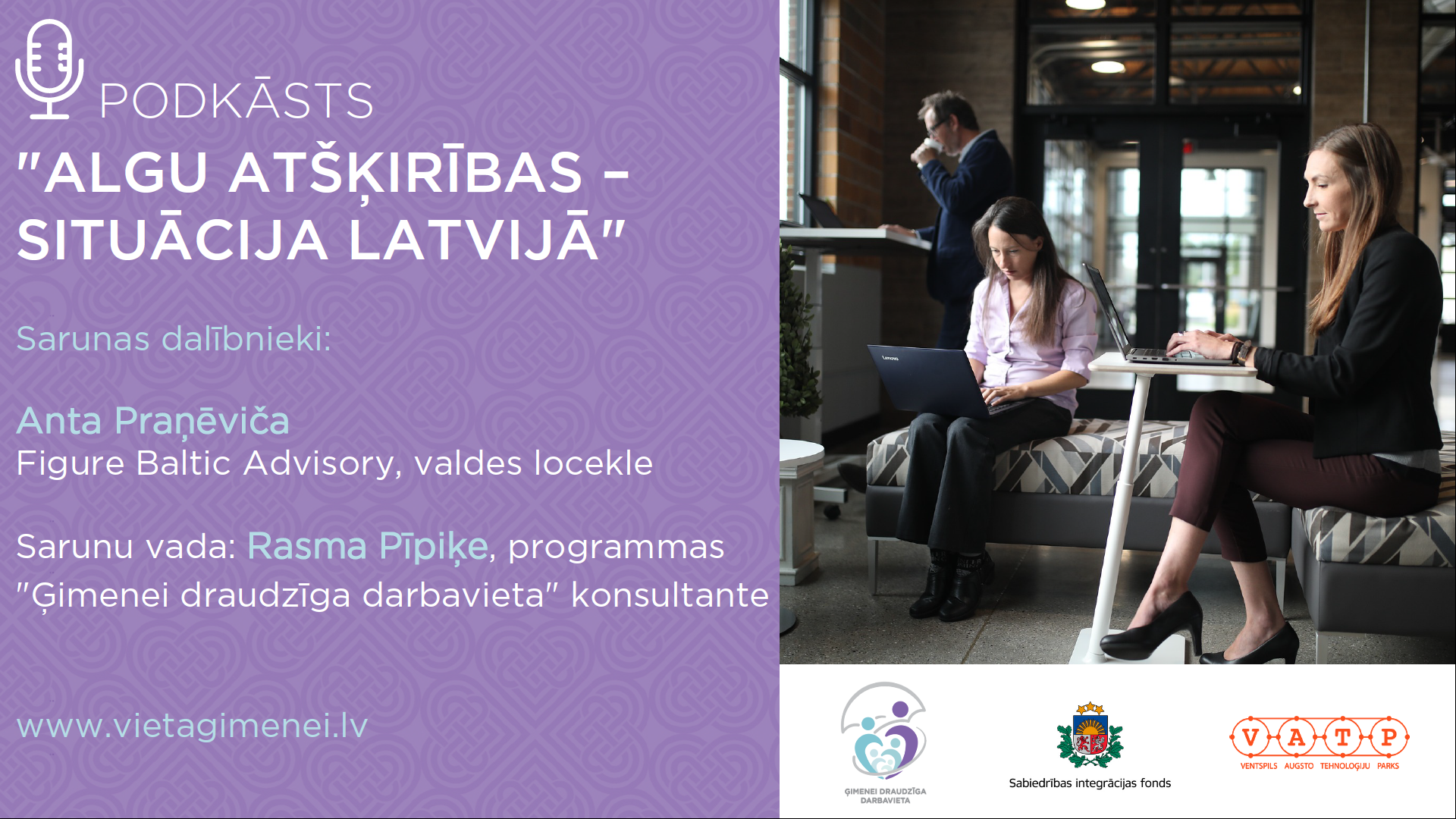
Aicinām noskatīties jaunāko valsts programmas "Ģimenei draudzīga darbavieta” podkāsta sarunu, kas veltīta algu atšķirības jautājumiem. Sarunas laikā apskatītie jautājumi: Kāda ir esošā situācija algu atšķirībās Eiropā un Latvijā? Kāda ir algu atšķirība vīriešiem un sievietēm, to galvenie veidošanās faktori un iemesli? Kādas ir sekas algu atšķirībām? Kādas ir iespējas risināt šo jautājumu veidā, kur Latvijas darba ņēmējs būtu ieguvējs? Sarunu vada valsts programmas "Ģimenei draudzīga darbavieta" konsultante Rasma Pīpiķe, piedalās Anta Praņēviča, Figure Baltic Advisory, valdes locekle. Programmas mērķis ir sekmēt tādas darba vides kultūras attīstību Latvijā, kas ir empātiska, cilvēcīga un saprotoša, vienlaikus piedāvājot instrumentus gan darba devēja esošās darba vides novērtējumam, gan finansiālu palīdzību dažādu atbalsta pasākumu ieviešanā darbiniekiem. Statusam "Ģimenei draudzīga darbavieta" var pretendēt ikviena organizācija, kura nodarbina vismaz vienu darbinieku – gan privātuzņēmumi, gan arī valsts un pašvaldību iestādes un nevaldības organizācijas. Aicinām ikvienu darba devēju pievienoties programmas "Ģimenei draudzīga darbavieta" kopienai: vietagimenei.lv/gimenei-draudziga-darbavieta/pieteikums Programmas "Ģimenei draudzīga darbavieta" īstenošanu nodrošina Sabiedrības integrācijas fonds sadarbībā ar nodibinājumu "Ventspils Augsto tehnoloģiju parks". Vairāk par programmu meklē: vietagimenei.lv